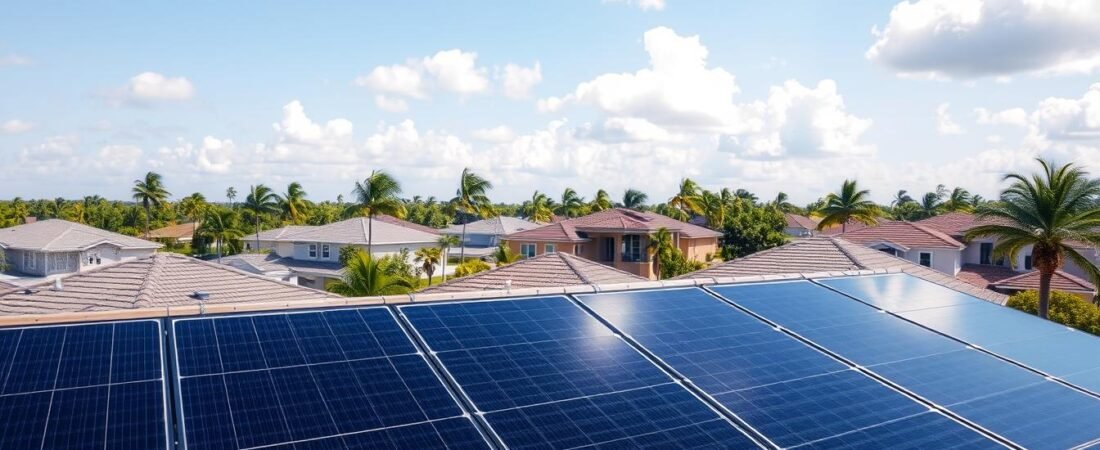
Thinking about making the switch for your home? This short guide breaks down the most relevant prices and expectations for homeowners in the area.
Recent market data shows the average installation runs about $12,301 for a typical residential system. EcoWatch updated these figures on January 24, 2025 to reflect current trends and incentives.
Understanding local prices helps you plan a realistic budget. Our research explains how system size, equipment quality, and the choice of installers affect final estimates.
Many homeowners find that long-term savings and federal incentives can offset upfront expenses. When you decide to install, a reputable installer will provide a custom estimate for your roof and household power needs.
This guide helps you compare prices, evaluate potential returns, and take the next step toward reliable clean energy for your home.
Understanding the Average Solar Panel Cost Apopka Residents Pay
Budgeting for a home system starts with two numbers: expected system size and the per-watt rate. In this market, a typical household needs about 5.5 kilowatts to meet usual energy needs. That figure is the baseline many installers use when preparing a quote.
System Size Requirements
Most homes require a 5.5-kW system to cover daily consumption. Choosing a slightly larger system can protect against future power use growth and seasonal peaks.
Price Per Watt Estimates
Locally, providers charge roughly $3.00 per watt on average. Multiply the 5.5 kW (5,500 watts) by the per-watt rate to estimate your total installation. This simple math helps you compare quotes quickly.
- Tip: Ask installers for a breakdown so you can compare equipment and labor separately.
- Tip: A well-sized system reduces monthly bills and increases long-term savings.
Key Factors Influencing Your Total Installation Price
Your total installation bill depends on a handful of important factors tied to equipment and labor.
Equipment choice drives a large share of the quote. High-efficiency modules and premium inverters raise the price per watt but deliver better long-term energy yields.
Labor and roof work add another major portion. Complex roofs, steep slopes, or unusual framing increase time and safety needs, which raises labor charges.
Permitting, inspections, and any required electrical upgrades appear on many contractor invoices. These local fees vary and can shift the average price notably.
- Choose equipment brands carefully to balance upfront price and performance.
- Factor in extra components like batteries or EV chargers when comparing totals.
- Request a detailed breakdown so you can see labor, permits, and hardware separately.
| Cost Driver | Impact on Price | What to Ask |
|---|---|---|
| Equipment brand & efficiency | High | Warranty and per watt rating |
| Labor & roof complexity | High | Crew experience and safety plan |
| Permits & inspections | Medium | Local fee estimates |
| Additional components | Variable | Batteries, EV chargers, monitoring |
Note: The average price in Florida before incentives sits near $19,512, so compare quotes against that benchmark and use a localized guide like Florida price breakdown for context.
Financial Incentives and Tax Credits for Florida Homeowners
Understanding available incentives makes installation far more affordable. Federal and state rules can cut upfront outlays and speed your payback.
Federal Investment Tax Credit
The federal investment tax credit (ITC) lets you deduct 30% of the system price from federal income taxes. This tax credit lowers your net cost and shortens the break-even time.
State Sales Tax Exemptions
Florida offers a sales tax exemption for eligible equipment. That means reduced initial bills for homeowners who buy solar panels and related hardware.
Property Tax Benefits
Florida also protects you from higher annual property taxes after installation. Your home’s assessed value can rise without extra yearly tax bills.
- Big win: ITC covers 30% of your total solar panel investment.
- Upfront savings: State sales tax exemption reduces purchase charges.
- Long-term: Property tax rules keep yearly taxes steady.
Tip: Consult a tax professional to claim incentives correctly and maximize benefits for your new energy system.
How to Select a Reputable Solar Installer
Finding a trusted installer starts with credentials and experience. Look for NABCEP certification and at least five years of residential work. These markers show the company knows safety and code requirements.
Get at least three detailed estimates. Ask each installer to list equipment, labor, permits, and the expected timeline. Compare warranties and whether the crew is employed directly or subcontracted.
- Choose companies that offer site surveys, permitting help, and long-term maintenance services.
- Verify local references and recent projects, such as those by R & R Fiberglass Pools Inc. or Central Florida Solar, Inc.
- Make sure the installer explains per watt pricing, panel options, and any extra costs clearly.
| Feature | What to Expect | Why It Matters |
|---|---|---|
| Certification | NABCEP or equivalent | Proof of training and safety |
| Experience | 5+ years residential | Fewer surprises during work |
| Estimate Detail | Breakdown of labor, equipment, permits | Clear comparisons and fair pricing |
| Warranty & Crews | Manufacturer and workmanship guarantees | Protects long-term performance |
Long-Term Savings and Return on Investment
Knowing your payback timeline turns an upfront expense into a clear investment plan. Use realistic numbers to see when the system begins to deliver net positive returns for your home.
Calculating Your Payback Period
Key figures: the average homeowner here can save about $21,560 over 25 years. Typical payback sits near 9.8 years, after which electricity from the system is effectively free.
Why that matters: once you pass the payback year, ongoing savings add directly to household income and value.
- Compare your current annual utility bills to projected generation to estimate years to break even.
- Claiming the federal tax credit shortens the payback period significantly.
- Higher local rates or a more efficient panel system raise total savings over the system lifespan.
| Metric | Value | Note |
|---|---|---|
| 25-year savings | $21,560 | Estimated lifetime energy savings |
| Typical payback | 9.8 years | After this, energy effectively free |
| Post-payback period | ~15 years | Years of net savings after break-even |
Bottom line: a well-chosen system is one of the strongest home improvements for long-term financial returns and stable energy power protection against rising utility rates.
Understanding Solar System Maintenance and Performance
Routine checks keep a rooftop energy system running efficiently for decades.
Annual inspections are recommended to verify electrical connections, mounting hardware, and inverter function. These quick visits catch loose wiring or wear before they reduce output.
Cleaning schedules depend on local weather and dust. Ask your installer to set a washing plan that fits your neighborhood’s conditions.
The labor for routine upkeep is minimal, and proper services protect the system’s 25-year lifespan. Regular care also helps warranties remain valid.
- Check generation metrics monthly to spot drops in power early.
- Schedule a professional diagnostic if production falls significantly.
- Keep panels free of debris and shade to maximize energy output.
| Task | Frequency | Benefit |
|---|---|---|
| Visual inspection | Annually | Finds loose mounts, wiring issues, and soiling |
| Cleaning | As needed (seasonal) | Restores full generation and efficiency |
| Performance check | Monthly monitoring; annual pro review | Confirms expected power and avoids hidden faults |
| Warranty review | At installation and yearly | Ensures maintenance meets manufacturer requirements |
Tip: For details on expected lifespan, see a trusted panel lifespan guide. If you want help building an online presence for your installer or service company, check out this resource on creating a professional website.
Environmental and Property Value Benefits
A home equipped to produce its own clean energy shows strong appeal to buyers and neighbors alike. Installing a generation system reduces household carbon emissions and makes daily life greener for future generations.
Homeowners often see a direct market advantage. Real estate experts report that properties with renewable systems frequently sell faster and can command higher offers.
Local installers play a role beyond wiring and mounting. Experienced teams design systems that blend with your roofline, boosting curb appeal while maximizing production and long-term power gains.
- Transitioning to clean power is one of the most effective ways for homeowners to cut their carbon footprint.
- Generating your own energy reduces demand for fossil fuels and supports community health.
- Well-installed systems add measurable resale value and attract eco-minded buyers.
Bottom line: investing in on-site energy delivers both environmental rewards and tangible property benefits for any homeowner considering green upgrades.
Conclusion
Closing your research with a clear plan makes the next steps simple and practical.
Investing in a solar panel installation can deliver lasting energy savings and environmental gain for your home. Use the federal tax credit and the average cost data to shape a realistic budget that fits your needs.
Get customized estimates from multiple local installers. Compare prices, warranties, and timelines so you choose the best installer and the right installation for your roof and usage.
Final note: a well-planned project pays back over decades. Start with trusted estimates and a local review to secure clean power and strong long-term value in the Apopka area.