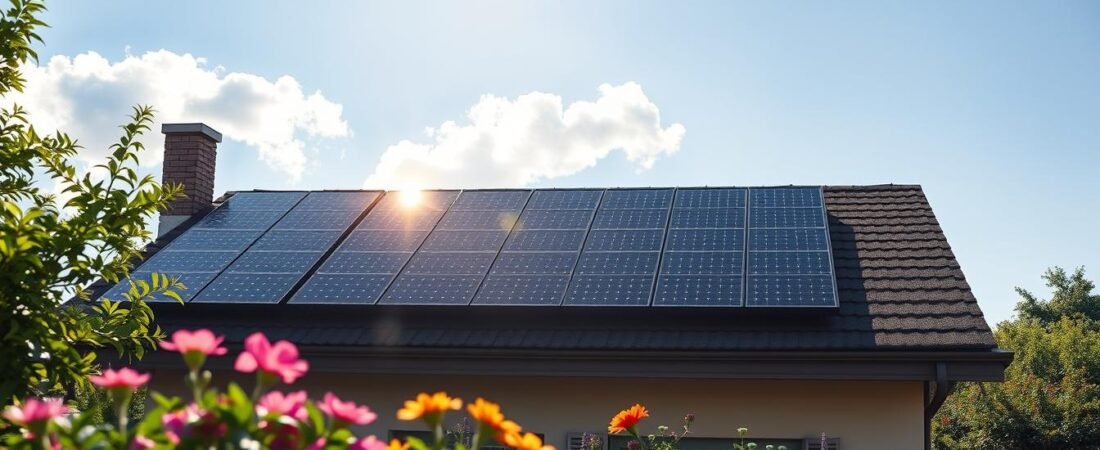
Save on electricity by choosing an affordable home solar solution that fits your budget. These systems let you generate clean power and cut monthly costs without complex planning.
Our complete panel kits include a high-efficiency inverter and all parts needed for a confident DIY installation. You can pick roof or ground mount options to match your property and energy goals.
Transparent pricing means you get a clear quote up front. That helps you compare price, expected kWh output, and long-term savings before you commit.
Whether you want a small system to offset bills or a larger setup for full electricity needs, these solutions aim to simplify installation and deliver reliable output for years.
Why Choose an Affordable Home Solar Panel Kit
Picking an affordable kit puts energy control back in your hands without a huge upfront cost. Entry-level options, like a 2kW DIY system with microinverters, start at $4,605, making renewable power accessible for many households.
Cost and flexibility: A reliable panel solution offsets grid reliance and often costs far less than full professional installation. You can scale capacity later or add a battery backup for outages.
Performance you can trust: These systems are sized to deliver expected kWh output and include the inverter tech to monitor daily production. Choosing a grid-tied option lets you sell excess electricity back to your utility.
- DIY solar projects give control and lower labor price.
- Support for roof or ground mount installation helps boost output.
- Clear quotes let you compare price, expected kWh, and ROI.
Understanding Your Energy Needs and System Sizing
Figure your average kWh use first — it drives every decision about the size and price of your system.
Start by adding 12 months of electricity bills to find a reliable monthly kWh average. That number shows how much power you need and guides the size of your solar kit and batteries.
Calculating Your Monthly kWh Usage
Divide annual kWh by 12 to get month-to-month needs. Use that to estimate how many panels and what inverter capacity fit your demand.
Planning for Future Energy Growth
Pick a system that allows expansion so you can add batteries or extra panels later. A slightly larger inverter or flexible panel kit protects your initial price investment.
“Sizing right today prevents costly upgrades tomorrow.”
- Analyze past bills to set realistic targets.
- Match battery and inverter capacity to expected output.
- Consider roof or ground mount options and whether a grid-tied or backup setup fits your needs.
Need help? Check a quick sizing guide or contact our installation support for DIY and quote assistance.
Comparing Grid-Tied and Off-Grid Solar Solutions
Deciding between a grid-tied and an off-grid setup shapes your cost, outage protection, and long-term maintenance needs.
Grid-tied systems stay connected to the utility so you can sell excess power back and lower monthly bills. This option often offers the best price per kWh and smaller battery needs.
Off-grid solar suits remote locations. It needs a larger battery bank and a reliable inverter to supply power after sunset. That raises upfront price but grants full energy independence.
| Feature | Grid-Tied | Off-Grid |
|---|---|---|
| Utility Connection | Yes — can export excess | No — fully independent |
| Battery Requirement | Optional / small backup | Essential — large bank |
| Typical Price | Lower initial cost | Higher due to batteries |
| Best Use | Reduce monthly bills | Remote or off-grid living |
Our solar kits come in both configurations and include inverters and mounting hardware for roof or ground mount installs. Choose the option that matches your energy needs, kwh goals, and DIY project plan.
Choosing Between Roof and Ground Mount Installations
Choosing a roof or ground mounting option shapes performance and price. This decision affects how much power your system produces and how easy it is to service.
Advantages of Rooftop Installations
Rooftop installs save yard space and use existing structures for a compact setup. They often lower project price because racks attach to the structure already in place.
Rooftop setups suit properties with limited ground area and can reduce permitting complexity in many neighborhoods.
Benefits of Ground Mounted Systems
Ground mount systems give you flexibility to set the optimal angle for year-round output. They make cleaning and repairs simpler, which can boost long-term performance.
Ground-mounted kits also allow easier expansion and can use sturdier racking for high-wind zones. Expect different price impacts based on excavation and mounting hardware needs.
- Check roof structure before installation; we can help evaluate load capacity.
- Pick mounting hardware that matches your site to secure panels in all weather.
- Consider maintenance access when choosing the mounting method.
| Factor | Rooftop | Ground Mount |
|---|---|---|
| Space Use | Uses roof; saves yard | Requires clear ground area |
| Performance | Fixed angles; good if roof tilt suits sun | Adjustable tilt for max output |
| Maintenance | Harder access; less cleaning | Easier access; better long-term output |
| Typical Price | Lower install cost | Higher due to mounts and groundwork |
Selecting the Right Inverter for Your Solar System
An inverter choice shapes how efficiently your system turns sunlight into usable electricity. The inverter is the heart of any array, converting DC from your panels into AC for everyday use.
Microinverters Versus String Inverters
Microinverters attach to each panel and optimize output per unit. They work well if shade or varied orientations reduce overall production.
String inverters connect a string of panels to one central device. This option often lowers the upfront price for larger systems where sunlight is consistent.
- The EG4 12000XP inverter delivers efficient, reliable conversion for many installations.
- A 6kW DIY solar panel kit with microinverters starts at $10,816 and shows how performance meets usability.
- Pick an inverter that matches expected kWh, supports future expansion, and fits your roof or ground installation plans.
Need sizing help? Check our quick guide on inverter sizing to match capacity, price, and long-term output.
Essential Components Included in Our Solar Kits
We bundle high-quality components so you can complete a reliable energy system with confidence.
Everything you need arrives in one box: tested panels, inverters, racking, wiring, and monitoring gear.
IronRidge racking is included as the roof mounting option. Its components are tested to the limit for strength and durability.
Battery backup parts are available in kits that add reliable power during outages. Each package is customized to match your energy needs and expected kWh output.
- Complete wiring and connectors for grid integration.
- Inverter and monitoring equipment matched to system size.
- End-to-end DIY support and installation guidance.
“A single, complete package simplifies purchase and reduces installation surprises.”
| Included Component | Benefit | Best Use |
|---|---|---|
| Panels & racks | High output and durable mounting | Roof or ground mount |
| Inverter & monitoring | Efficient conversion and performance data | Match to kWh goals |
| Battery backup | Power during outages | Critical loads and resilience |
Benefits of DIY Solar Installation and Support
Tackling a DIY install gives you direct control of parts, placement, and final output while cutting labor costs. That control often saves thousands in labor and reduces total price for the full system.
We back every project with phone and email support so you get timely answers to your questions during installation. Our team helps size the inverter and battery backup to meet your energy needs.
Customers like Alex M. report systems sized exactly to spec. Alex now charges two EVs and runs central AC without surprise electricity bills.
- Complete contents arrive so you have everything you need for a successful DIY solar project.
- Permit approval guarantee simplifies getting a grid-tied solar system authorized by local authorities.
- Transparent quotes and expert guidance make it easy to plan future expansion or add battery backup.
“A DIY route gave me savings and the confidence to expand later.”
Choose a DIY path to lower price, customize your array, and keep strong technical support from purchase through final connection.
Conclusion
, A thoughtfully designed system combines cost control, easy installation, and dependable output. Investing in an affordable home solar option reduces monthly bills and supports long-term savings with clear returns.
Assess your energy use, pick the right inverter and mounting, and decide between grid-tied or battery-backed designs to match needs. Our DIY-friendly package includes quality panels, an inverter, rails, and support to guide you through the install.
Ready to move forward? Choose a solution that fits your budget and goals. With reliable components and expert help, the transition is simple, practical, and rewarding for U.S. homeowners.