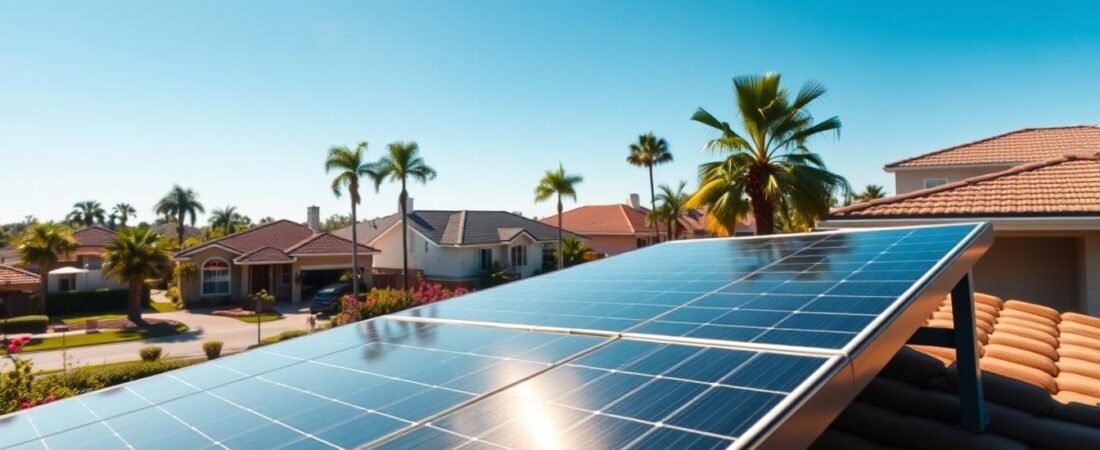
Florida ranks second nationwide for residential installations, so homeowners here have strong local expertise and supply chains. This guide offers a clear estimate for what to expect when planning a home system in the Winter Garden area.
We cover the typical steps in a solar panel installation, from site review to final hookup. You will learn how installers assess roof size, permits, and expected energy output.
Our goal is practical clarity. You’ll get an overview of financial and logistical needs, plus tips to compare quotes. This helps you plan a reliable installation that fits your goals.
Short, data-driven guidance makes it easier to decide if a system is right for your home. Read on for detailed estimates and local factors that shape final numbers.
Understanding the Solar Landscape in Winter Garden
Rising utility bills have pushed many Winter Garden residents to rethink how they source power at home.
Rising Electricity Rates
Since 2020, Florida electricity prices rose 26%, and that jump is felt across Winter Garden. Many customers now look for a reliable way to stabilize monthly bills.
Local installations have increased as the industry expands to meet demand. A well-designed system helps homeowners generate power and reduce grid dependence.
Environmental Impact
Choosing solar energy provides a clear environmental benefit. By installing panels, you lower your home’s carbon footprint and support cleaner air for the community.
- Reduced emissions for every home that produces its own energy.
- Collective adoption strengthens local resilience during grid fluctuations.
- Growing installations build local expertise and better service options for customers.
Understanding this landscape helps you weigh near-term savings against long-term benefits.
Factors Influencing Your Solar Panel Cost Winter Garden
Not all systems are the same — size, roof type, and equipment drive the final project price.
Your required system size in kilowatts is the biggest driver of upfront investment and long-term savings. A typical 10 kW setup in Winter Garden is about $27,332, though individual estimates will vary.
The installer will review your roof, your average energy use, and local permits. High-efficiency modules and premium inverters raise the price but can boost production in a smaller footprint.
- Sizing: Matches system output to home use to avoid overspending.
- Equipment: Inverter type and racking affect performance and service life.
- Labor & service: Skilled installers ensure proper placement and warranty protection.
| Factor | Impact | Notes |
|---|---|---|
| System size (kW) | High | Primary driver of total price and savings |
| Roof condition | Medium | Repairs or complexity add labor |
| Equipment quality | Medium | Efficiency vs price trade-off |
Consulting a local expert yields the most accurate estimate for your home. A brief site visit helps an installer tailor a system that matches the way you use energy.
Comparing Cash Purchases Versus Solar Leasing
Choosing between owning equipment and leasing a system shapes your monthly budget and long-term savings. Below we compare the two approaches so you can pick the best way for your home in Winter Garden.
Benefits of Owning Your System
Buyers see a typical payback around 10.5 years when they pay cash. After that point, the energy produced translates to real money saved.
Ownership also lets you claim tax incentives and adds value to your property. You control maintenance choices and retain the equipment’s full lifetime benefits.
Advantages of Leasing
Leasing is a lower-entry option that removes big upfront payments. Providers usually handle monitoring and repairs, which simplifies ownership for many homeowners.
A fixed monthly lease payment can protect you from rising utility rates and delivers predictable monthly savings right away.
| Option | Upfront Outlay | Maintenance | Long-term Savings |
|---|---|---|---|
| Buy (cash) | High | Owner responsibility | High after ~10.5 years |
| Buy (loan) | Medium | Owner responsibility | Medium to high |
| Lease | Low | Provider responsibility | Moderate, with lower equity |
Both routes reduce your reliance on grid energy, but the right pick depends on whether you prefer upfront investment or lower monthly payments.
Navigating Florida Solar Incentives and Tax Exemptions
Florida offers two straightforward breaks that make clean-energy purchases easier for Winter Garden homeowners.
First, a 6% sales tax exemption applies automatically at the point of sale for eligible equipment. That reduction lowers the upfront amount you pay when scheduling a panel installation or ordering a complete system.
Second, Florida Statute 196.182 provides a 100% property tax exemption on the added home value from an installed system through 2037. This means increased home value from new equipment will not raise your property taxes.
- Both incentives apply to customers who add a solar-only or a battery-backed system.
- Your installer typically files the needed paperwork to secure these breaks.
- These programs reduce long-term electricity exposure and improve return on investment.
| Incentive | Benefit | Notes |
|---|---|---|
| 6% Sales Tax Exemption | Lower upfront payment | Applied at purchase point for all residents |
| 100% Property Tax Exemption | No tax on added home value | Valid through 2037 under state law |
| Installer Support | Reduced paperwork burden | Most contractors handle filings and permits |
For full details and local program updates, review Florida solar incentives.
The Role of Net Metering in Your Energy Savings
When your system produces more power than you use, net metering converts that surplus into useful account credits. This policy makes your investment more productive by sending extra generation back to the grid for full retail-rate value.
How Credits Work with Local Utilities
Duke Energy customers in Winter Garden pay about 18.1¢ per kWh, above the Florida average of 15.2¢. That higher rate means exported energy earns meaningful credit toward your monthly electricity charge.
The state lets customers receive full retail credits and roll them over month to month for 12 months. Those rolling credits can cover slow-production seasons and help reduce bills to the minimum fixed fee.
- Installer teams can explain how your local account will show credits and apply them.
- Many customer reviews note bills dropping to the minimum required fee after adding a solar panel system.
- If you have questions about utility rules, ask your installer — they handle service details and local paperwork.
Net metering is a vital part of Florida incentives for clean power. It maximizes returns on your system while keeping the grid stable.
Evaluating Battery Storage Options for Added Reliability
Battery options turn intermittent generation into dependable household power.
Adding a battery gives Winter Garden homeowners a reliable backup during outages. A storage unit also lets you use stored energy after sundown, boosting self-sufficiency and reducing reliance on grid electricity.
The federal government offers a 30% tax credit for standalone battery storage systems of 3 kWh or more through 2032. OUC customers may qualify for up to a $2,000 rebate for systems of 8 kWh or larger.
Your installer can evaluate whether a battery suits your use patterns and reliability needs. For help comparing models and incentives, see practical options like battery options for your home.
| Battery Size | Best Use | Incentives |
|---|---|---|
| 3–5 kWh | Short backup, essential circuits | Eligible for 30% federal credit |
| 6–10 kWh | Evening load shifting, partial backup | 30% federal credit; OUC rebate applies at ≥8 kWh |
| 10+ kWh | Whole-home backup, extended autonomy | 30% federal credit; higher rebate potential from local programs |
| Typical Install | Paired with a panel system for stored energy use | Installer evaluates incentives and configuration |
Choosing the right battery enhances value, protects against rising electricity rates, and gives customers peace of mind. Small steps—like evaluating size, incentives, and installer support—go a long way toward lasting reliability.
What to Expect During the Solar Installation Process
Expect a few predictable steps from first site check to final hookup — each helps ensure safe, reliable operation.
Site Assessment and Permitting
The process starts with a site visit to confirm roof strength, orientation, and shading. The installer measures roof area and reviews your electrical panel and service entrance.
Permits follow. Your installer usually submits drawings and paperwork to the local building office. Permit approval can take days to weeks depending on workload.
The Installation Timeline
Once permits arrive, the physical work often takes one to three days for a typical residential system. Complex roofs or added battery work can extend labor time.
Crews mount racking, secure modules, and wire the inverter to the home service. Clean, methodical work reduces rework and speeds completion.
Final Inspection and Interconnection
After the crew finishes, a local inspector reviews safety and code compliance. Approval is required before the utility grants final interconnection.
Final hookup allows the system to deliver power to your home and to bank credits with net metering where applicable.
“Clear communication from the installer made the whole process quick and stress-free.”
- The installer manages permits, schedules, and inspections.
- Plan for 1–3 days of on-roof work for most homes.
- Good installers explain timing and follow local rules for safe interconnection.
| Stage | Typical Time | Key Action |
|---|---|---|
| Site Assessment | 1–7 days | Roof check, layout, permit drawings |
| Permitting | 1–21 days | Local reviews and approvals |
| Installation | 1–3 days | Racking, modules, inverter wiring |
| Inspection & Interconnection | 1–14 days | Final inspection and utility sign-off |
For a practical how-to on installation basics, see this step-by-step guide.
Assessing the Long Term Financial Benefits of Solar
A residential system can turn monthly utility bills into a long-term financial asset for many homeowners.
In Winter Garden, homeowners who generate their own power can save an estimated $81,000 over 25 years. That figure reflects lower monthly electricity payments and credit from excess generation rolled forward.
Installing a reliable panel system shifts recurring bills into an owned resource. Over time, production offsets rising electricity rates and reduces net monthly outlays.
Many customers report that the long-term benefits outweigh the initial installation and equipment expense. The typical payback sits well within the expected service life of high-quality modules.
- Lock in energy expenses: Generating your own clean energy hedges against future utility increases.
- Monthly relief: Lower bills for decades improve household cash flow.
- Asset value: Production increases home value and acts as a long-term financial resource.
| Metric | Estimate | Why it matters |
|---|---|---|
| 25-year savings | $81,000 | Major lifetime financial benefit for homeowners |
| Payback period | Within product lifespan | System repays investment well before end of service life |
| Monthly impact | Lower electricity bills | Improves monthly budget and protects against rate hikes |
Assessing long-term benefits helps explain why many Winter Garden residents choose this clean energy route—it’s a practical path to real savings and greater financial stability over time.
Choosing the Right Solar Installer for Your Home
Finding a trusted installer in Winter Garden starts with the right questions and verified credentials. A careful vetting process protects your investment and helps the system deliver reliable service for years.
Vetting Contractor Reputation and Warranties
Ask about experience, certifications, and the exact warranty language. Reputable companies often provide 25-year, all-inclusive warranties that cover parts, labor, and performance. That coverage is the industry gold standard and offers peace of mind.
Check customer reviews and recent work photos to confirm quality and aesthetics. A Zillow study shows homes with panels can sell for about 4.1% more, so look for installers that balance function with curb appeal.
- Confirm the installer will handle permits, interconnection, and incentives paperwork.
- Ask specific questions about equipment access, battery options, and service plans.
- Request references and proof of insurance before any installation work begins.
| Item | What to Verify | Why It Matters |
|---|---|---|
| Experience | Years in the industry, local projects | Ensures smooth work and knowledge of rules |
| Warranty | 25-year parts, labor, performance | Protects your home and long-term production |
| Reviews | Recent customer feedback and photos | Shows service quality and finished work |
“Choosing an expert installer made the whole process simple and the roof looks great.”
Final tip: prepare a short list of questions and compare at least three local companies. That step helps you find an installer who offers strong warranties, clear communication, and reliable post-installation support.
Conclusion
A move to a residential energy system is a practical step toward greater household control and predictability.
In Winter Garden, taking advantage of state incentives and net metering can strengthen your return. A reliable company and a qualified installer make the installation smooth and help you get the most from your panels and any battery backup.
Compare quotes, read local reviews, and review your roof and usage to see your potential savings. Whether you buy or lease, adding a solar panel solution is a proven way to lower electricity bills and increase home value while delivering dependable power for years.