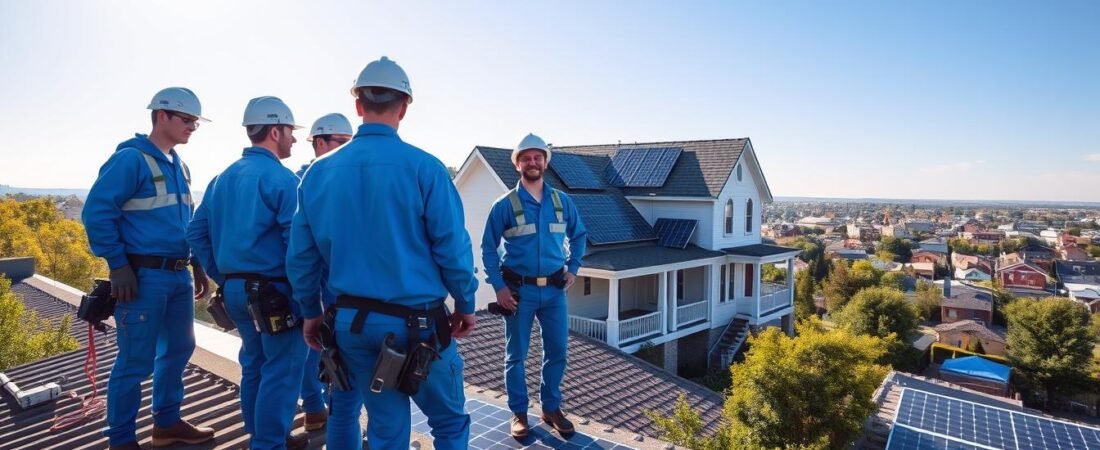
Choosing the right installer can make or break your home energy project. This short guide helps homeowners compare local providers like Alternative Energy Southeast, Inc. and evaluate service, equipment, and pricing with confidence.
We cover how to read reviews, check years of experience, and verify workmanship warranties. You will learn which questions to ask and how to compare quotes so you can judge cost, timeline, and expected savings.
Federal incentives can lower your out‑of‑pocket cost, but a transparent contract is essential. This guide shows a practical way to vet a company, assess system quality, and avoid surprises during the job.
By the end, you’ll be ready to request quotes, weigh equipment and battery options, and pick an expert installer who matches your budget and goals.
Why Transitioning to Solar Energy Makes Sense in Athens
Choosing a home energy system that uses abundant local sunlight helps protect your budget and the environment. Switching to solar reduces dependence on natural gas and grid electricity, so monthly bills can fall and your household becomes less vulnerable to price swings.
Photovoltaic panels emit far fewer contaminants than fossil fuels. That means cleaner air for your neighborhood and fewer emissions over the life of the system.
“Many homeowners find that there is so much solar potential here that investing in a high-quality system is a smart financial decision.”
- Lower monthly utility costs and a smaller carbon footprint.
- More stable home energy expenses over time.
- Potential to raise property value when selling.
| Benefit | Short-term Impact | Long-term Impact | Notes |
|---|---|---|---|
| Lower bills | Reduced monthly electricity costs | Ongoing savings over decades | Depends on system size and usage |
| Environmental | Less local air pollution | Reduced greenhouse gases | Supports community health |
| Property value | Higher buyer interest | Improved resale price | Market varies by neighborhood |
How to Evaluate Solar Panel Installation Companies Athens GA
Begin your vetting by checking verified reviews and the number of completed systems a firm has installed.
Checking Customer Reviews
Look for recent customer service reviews on Google and SolarReviews. Read both high and low ratings to see how a company handles problems.
Make sure reviewers describe actual jobs, timeline, pricing, and workmanship warranty. Honest feedback shows how the team treats homeowners during and after a job.
Assessing Years of Experience
Ask how many years the company has been active. A minimum of five years suggests long-term support and steady service.
Also ask about total systems installed—Alternative Energy Southeast, Inc. reports over 750 in-house installations, which signals deep field experience.
- Request a clear guide on equipment, price, incentives, and roof procedures.
- Get multiple quotes and compare quality, warranty, and expected savings.
When in doubt, consult a trusted local source or a local installer guide for vetted referrals and next steps.
Essential Credentials to Look for in a Solar Provider
Credentials show whether a team follows safety rules and local codes. Check that the company employs NABCEP-certified professionals or licensed electricians to ensure proper work and code compliance.
Insurance matters: request proof of liability and workers’ compensation. Proper coverage protects your roof and the crew during the project.
Excellent customer service should continue after the install. Ask how long the provider will answer questions and handle warranty claims.
- Verify licenses and state permits before signing.
- Ask for an expert rating or recent job references.
- Confirm insurance and certification documents in writing.
| Credential | What to Ask For | Why It Matters |
|---|---|---|
| NABCEP or Electrical Cert | Certification or electrician license | Ensures safe, code-compliant work |
| Insurance | Liability and worker coverage | Protects property and people |
| Licenses & Permits | State contractor license | Legal operation and inspection clearance |
| Reputation | References and expert rating | Shows consistency and trust |
For a vetted source of certified providers, consult the registered provider list.
Understanding the Solar Installation Timeline
Knowing the typical steps and timeframes removes surprise delays for your home energy project.
Site Visits and Permitting
Your chosen company will schedule a site visit. This may be virtual or in person at your house to measure roof layout and assess energy needs.
After equipment is ordered, the same company submits permits. Permitting ensures the system meets local codes and clears inspections.
The Installation Phase
The actual job usually takes one to three days. Crews set racking, run wiring, and attach panels and the main panel connections.
Good teams track time and keep the work zone tidy so the house stays safe during the project.
Final Inspection
A town representative performs a final inspection and approves interconnection. That sign‑off completes the installation phase and lets the system go live.
With over 750 systems installed, an experienced company understands how time, equipment delivery, and permits affect price and the contract schedule.
The Role of Battery Storage in Your Home Energy System
Adding battery storage turns intermittent daytime production into steady household power.
Batteries store excess electricity so your home keeps running when the grid goes down or the sun is not shining.
Many local providers now offer integrated battery solutions that pair with a solar panel system. A battery lets you capture surplus generation and use it during peak hours.
“A properly sized battery can change a rooftop array from a convenience into true home resilience.”
The benefits include reliable backup power, better value when net metering is limited, and greater control over energy costs.
- Store excess output and gain backup power during outages.
- Maximize self-consumption if your utility does not pay full retail rates.
- A trusted company will match battery equipment and hybrid inverters to your load.
| Feature | Why it Matters | Typical Result |
|---|---|---|
| Battery capacity | Determines backup hours | More kWh = longer power during outages |
| Hybrid inverter | Integrates panels and battery | Smoother transition to stored power |
| Warranty & service | Protects long-term performance | Lower risk and predictable support |
Note: Some manufacturers, like Sol-Ark, run promotions (for example a $500 discount when you buy a complete system and battery). Talk with your chosen company about incentives and the best equipment for your home.
Navigating Federal and Local Solar Incentives
Understanding available federal and local incentives can cut thousands from your home energy project cost.
The 30% federal tax credit is the most significant single incentive for homeowners who buy solar panels or a battery. It reduces your federal tax bill by 30% of eligible project costs.
Federal Tax Credit Benefits
Homeowners can use this credit to lower the total cost of a panel system and any qualified battery storage. To claim it, keep receipts and IRS Form 5695 when you file taxes.
- Ask for a breakdown: When you request quotes, have the company list federal and local incentives separately so you see real net price.
- Confirm eligibility: Ensure your system and components meet government rules before assuming savings.
- Paperwork help: A high-rated service provider will guide you through forms and deadlines to secure the full credit.
- Combine rebates: Pairing the federal credit with local rebates or utility programs can cut the final price further.
For details on state and local programs, consult the GA commercial incentives page for business and localized rebate options: GA commercial incentives.
Tips for Comparing Multiple Solar Quotes
Compare each quote line by line so you spot hidden fees and mismatched assumptions.
Begin with the price per watt. In Athens, average ranges sit near $1.86 to $2.80 per watt, so use that to flag outliers.
Get at least three quotes from different companies. That gives you context for price, equipment, and expected savings.
- Check that each contract lists system size, production estimates, and total cost.
- Ask why a low quote is cheaper — it may mean lower-quality equipment or slim service.
- Confirm all bids use the same equipment so long‑term performance compares fairly.
- Request an expert to explain the payback period and expected electricity savings.
| Compare | What to look for | Why it matters |
|---|---|---|
| Price per watt | $1.86–$2.80 guide | Shows fair market cost |
| Contract details | Production estimate & warranties | Protects value and expectations |
| Equipment match | Same panels, inverter, battery | Ensures apples-to-apples comparison |
| Payback | Years to recoup cost | Frames real savings |
Why Workmanship Warranties Matter for Long-Term Savings
When a company backs its job for decades, you avoid surprise costs and enjoy steady system output.
Alternative Energy Southeast, Inc. includes a 25‑year workmanship warranty to protect homeowners from installation errors and early failures.
That long warranty means the company will fix problems that stem from the job. It covers leaks, wiring mistakes, and other faults that can harm performance and roof health.
- Protection: A 25‑year warranty reduces unexpected repair bills and supports long-term savings.
- Quality: Good workmanship prevents common failures that lower system output.
- Confidence: A written warranty shows the company stands behind its service and work for many years.
| Feature | Why It Helps | Typical Result |
|---|---|---|
| 25‑year warranty | Covers workmanship defects | Fewer surprise repair costs |
| Quality checks | Ensures correct wiring and seals | Stable energy output and fewer leaks |
| Written agreement | Clear terms and response time | Faster claims and reliable service |
Always verify the warranty in your contract. Clear terms are a critical part of your long-term savings strategy and peace of mind.
Red Flags to Avoid When Hiring a Solar Contractor
Spotting common contractor pitfalls early helps homeowners protect their roof and investment.
Before you sign any contract, pause and check the basics.
Unrealistic Pricing Promises
Be wary of any company that promises a final price far below the local average. Low bids often hide poor equipment, rushed work, or missing permits.
Ask for a detailed quote that lists labor, equipment, and expected production. Compare at least three quotes so you see what is reasonable.
Lack of Transparency
Make sure the provider shares clear answers to basic questions: years in business, references, warranty details, and proof of insurance.
A trustworthy contractor will not pressure you to sign immediately. If customer service reviews or ratings are weak, walk away.
Practical checklist:
- Verify online reviews and BBB or Google ratings.
- Confirm written warranty terms for the system and workmanship.
- Refuse high‑pressure sales and demand time to review quotes.
Tip: Alternative Energy Southeast, Inc. holds top ratings on major review sites, which can be a useful benchmark when you evaluate other offers.
Conclusion
Choosing the right company means balancing quality, cost, and long‑term support. This guide equips you to compare offers, read reviews, and judge warranty terms so you can invest in reliable solar energy with confidence.
Take the time to get multiple quotes and confirm credentials. A fair bid, solid workmanship, and clear service terms lead to better savings over time.
When you are ready, learn more about our company and approach here: about our company. Good research now prevents surprises later and helps ensure a successful installation that meets your household goals.