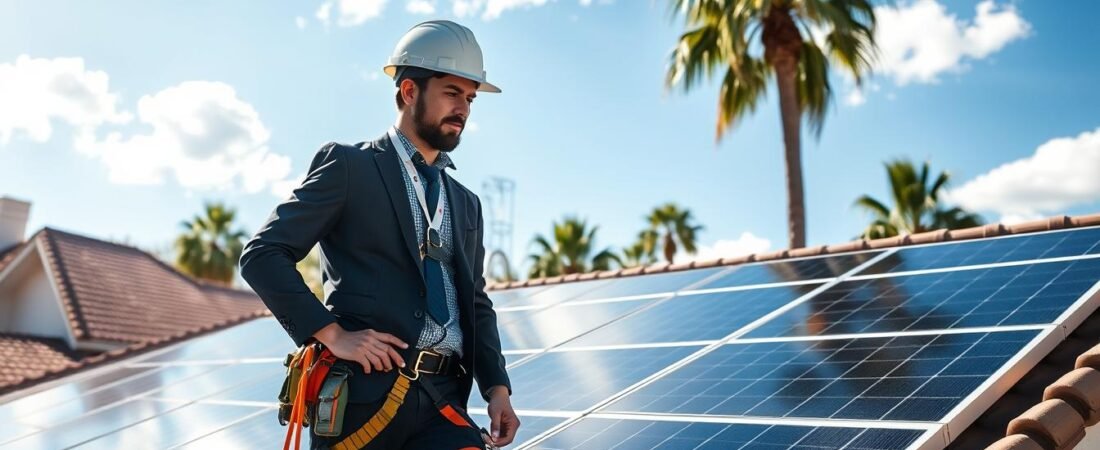
Looking for a trusted company for solar panel installation costa mesa? Infinity Solar offers local service across Orange County with years of experience and full licensing (License #824287).
Our team is Tesla Powerwall certified and installs FranklinWH and Enphase home batteries. We handle panels, storage, and EV charging as one coordinated project so you get clean, code‑compliant work from first call to permission to operate.
Expert services means accurate system sizing, quality equipment, tidy installs, and clear communication. The goal is simple: lower electricity bills, boost energy independence, and build a system that performs year after year.
What you’ll learn next: step‑by‑step installs, equipment choices, battery backup options, EV charger add‑ons, roof coordination, monitoring, and financing. Compare options and view top local options on top local options.
Ready to get a quote? Call (714) 880-8089 or visit our Orange office at 2478 N Glassell St., Suite A to request estimates without high‑pressure sales.
Solar Solutions for Costa Mesa Homes and Businesses
With clear skies most of the year, properties in costa mesa convert sunlight into dependable energy. This makes solar energy a practical long‑term choice for both residences and commercial sites.
Well‑sized systems cut monthly savings by lowering utility bills and buffering against rising rates. Customers who pair storage and smart monitoring see better long-term ROI and steadier electricity supply.
Professional work in Orange County means licensed crews, full insurance, tidy electrical connections, and a documented permitting process. A trusted Costa Mesa solar company will show clear scopes, realistic timelines, and honest guidance about whether you need batteries or an upgrade.
Businesses differ from a home in demand profile and operating hours, so commercial systems often scale larger and use different controls. Shop wisely: compare equipment, warranty, workmanship, monitoring, and responsiveness—not just price.
Want to compare options? Visit the local guide to compare local solar companies and request quotes from multiple vendors before deciding.
| Type | Typical Benefit | Customer focus |
|---|---|---|
| Home | Lower monthly costs, backup for outages | Comfort, long-term savings |
| Business | Reduced overhead, larger scale savings | Operating hours, ROI tracking |
| Professional Service | Code‑compliant work, timely permits | Quality, clear communication |
solar panel installation costa mesa Services
We deliver tailored work for homeowners, businesses, and sites needing modern system updates. Our teams provide clear estimates and practical guidance so you know what to expect.
Residential installs for homeowners
What’s included: roof evaluation, electric use analysis, panel layout, inverter selection, and tidy conduit to the main electrical panel.
We test racking, secure roof penetrations, and commission the system so it is utility-ready and easy to monitor.
Commercial projects for businesses and facilities
Large sites get focused sizing, equipment selection for operational needs, and scheduling that cuts downtime. Documentation and stakeholder-ready reports are provided.
Upgrades for older systems and equipment
Common reasons to upgrade include aging inverters, adding panels, adding consumption monitoring, or prepping for battery storage after a main panel change.
Quality matters: safe wiring, correct racking, and final testing affect long-term performance and reliability.
| Service Type | Key Focus | Typical Outcome |
|---|---|---|
| Residential | Roof layout, inverter match, neat wiring | Lower bills, backup-ready, code-compliant |
| Commercial | Large-scale sizing, minimal downtime, documentation | Stable operations, stakeholder reporting |
| Upgrades | Inverter swap, add panels, monitoring | Improved output, easier monitoring |
How Solar Panel Installation Works From Site Visit to Power On
A clear project roadmap helps homeowners and businesses know who does what and when. This step-by-step view removes uncertainty and shortens the time to power on.
Consultation and quotes: Compare equipment, expected production, workmanship warranty, monitoring, and whether the contract covers permits and interconnection. Ask each installer for model names, estimated output, and a written timeline so you can compare apples to apples.
Site visit and design: The crew will measure the roof, check shading, inspect the attic and electrical panel, and create a layout tuned to your property. This design balances aesthetics with maximum system energy production.
Permits and ordering: Your chosen installer files permits, orders gear, and schedules inspections. Typical lead time varies, so make sure paperwork moves early to avoid delays.
Installation day and timeline: Most installs take 1–3 days. Racking goes up first, wiring follows, then panels and inverters are mounted and tested. Crews tidy conduits and document final connections before leaving.
Inspection and interconnection: A city inspector signs off, then the utility grants permission to operate. Once approved, the system can export excess power and begin offsetting your bill.
How it produces electricity: Sunlight creates DC current in the modules, the inverter converts that to AC, and your electrical panel distributes usable power. If production exceeds use, net metering credits your account so excess energy lowers your bill.
Solar Panels, Inverters, and Mounting Options Built for Performance
Equipment choices—from premium modules to robust inverters and racks—drive long-term output and reliability.
Top brands and what quality standards mean
Start by matching the right module to your goals: top production, premium looks, or best value. Installers commonly reference SunPower, Panasonic, LG, and S-Energy as reliable makers.
Quality standards mean long warranties, proven field reliability, and parts rated for hot Southern California conditions. Those factors help systems last and keep returns steady.
Inverter choices and system efficiency
The inverter converts DC from the modules into AC you use. Grid-tied inverters let you export extra energy for credits.
Battery-capable inverters store energy for backup. Choosing the right inverter improves system efficiency and matches the rest of the equipment.
Mounting options: roofs, ground, and pole
Roof-mounted racking fits most homes. Ground mounts work when space is available. Pole mounts lift modules above shade or tight roofs — useful on farms or odd lots.
Good mounting also aids performance by enabling airflow and correct tilt for consistent production.
| Component | Typical Benefit | When to choose |
|---|---|---|
| SunPower, Panasonic, LG, S-Energy | High output, strong warranties | Long-term value or premium installs |
| Grid-tied inverter | Efficiency, net metering credits | Lower cost, no backup need |
| Battery-capable inverter | Backup and storage integration | Power resilience and outage protection |
| Roof / Ground / Pole mounts | Flexible placement, airflow, tilt control | Site-specific constraints and shading |
Battery Storage and Backup Power for Outages
Adding a battery to your energy setup gives reliable backup and smarter use of the power you generate. A well‑sized battery provides quiet, fuel‑free backup and helps you shift usage to stored energy when the grid is busy or down.
Tesla Powerwall benefits
Tesla Powerwall detects outages automatically, stores clean energy, and runs essential circuits without the noise or fuel of a generator. It recharges from on‑site generation and supports EV charging when paired with your system.
Enphase modular storage
Enphase offers modular Encharge batteries for flexible capacity. Encharge 3 delivers about 3.4 kWh usable and Encharge 10 provides 10.1 kWh usable. You can add units over time and use the Enpower smart switch for seamless transfer to backup mode.
FranklinWH reliable backup
FranklinWH batteries are another dependable option for whole‑home or partial‑home backup planning. Certified installers can size equipment to match your loads and goals so critical circuits stay powered.
Smart switching and year‑round value
Smart switching isolates your home automatically when the grid fails, keeping life running smoothly. Combined, storage and generation reduce reliance on the grid year‑round by storing daytime production for use at night or during outages.
“A battery turns intermittent generation into dependable, on‑demand power for your home.”
EV Charger Installation Powered by Your Solar System
Make daily charging simple with a professionally wired charger that ties into your energy setup.
Residential and commercial services are available. Licensed, insured electricians find the best location, wire the right circuit, and test operation to code. This work keeps your property safe and charging reliable.
Best placement and electrical requirements
Choose a spot close to the main panel for shorter runs and easier conduit routing. Consider cable reach, parking patterns, and weather exposure for outdoor outlets.
Whole-system integration
When a battery is paired, excess daytime energy can store and later power EV charging. That increases self-use and lowers grid electricity during peak times.
- Why add charging: predictable fueling costs and cleaner transportation.
- Code matters: correct circuit sizing, breaker selection, and safe wiring protect your home and car.
- Scenarios: garage and driveway setups differ from workplace systems in access and usage patterns.
- Coordination: a skilled team aligns generation, storage, and charging so equipment works as one system.
Solar + Roofing Services for a Longer-Lasting Investment
One coordinated project for roofing and power generation avoids repeat labor and future disruption. This investment strategy aligns lifespans so you get full value from both systems.
Do-it-once logic: If a roof is near end-of-life, replacing it before an energy installation prevents paying to remove and reinstall panels later. That saves both cost and time on future work.
Work that combines roofing and system setup cuts duplicated labor, shortens schedules, and limits disruption to your property. Good vendors cite brands like GAF, CertainTeed, and Shingle Master for materials that pair well with mounting hardware and deliver long-term quality.
When to repair versus replace? Minor leaks and a few missing shingles usually call for maintenance. Constant repairs, visible wear, or roofs near the end of useful life mean a full replacement is smarter for protecting your larger investment.
“Align roof and energy timelines so you avoid inconvenient mid‑cycle projects.”
- Save money by avoiding duplicate removal labor.
- Protect warranties and anchor points for stable performance over the years.
- Choose a single trusted service team to manage both trades and reduce scheduling gaps.
Monitoring, Main Panel Upgrades, and Ongoing Solar Maintenance
A good service plan blends live monitoring with routine checks to protect your investment. Monitoring confirms your system delivers the expected energy and catches faults early so savings stay on track.
System monitoring for fast issue detection
Why monitoring matters: dashboards and apps show real‑time production, historical reports, and alerts when an inverter or circuit underperforms. This visibility helps you verify output and protects long‑term savings.
What “monitor solar panel output” looks like
Typical tools display hourly production, daily totals, and outage alerts. When a string or inverter drops, the platform sends a notice so technicians can troubleshoot quickly.
Electrical main panel and upgrade needs
The electrical main panel connects to the utility and protects circuits. Capacity or safety issues can block interconnection approval, so installers may recommend an upgrade before adding rooftop equipment.
Consumption monitoring to boost self‑use
Consumption monitoring shows how the home uses electricity across the day. Owners can shift loads to match production and raise self‑consumption, which lowers bills and improves ROI.
Ongoing maintenance services
Planned checks include visual inspections, inverter diagnostics, roof‑penetration reviews, and post‑storm tests. Responsive service plans cover troubleshooting and repairs as needs change—new EVs, added HVAC, or a battery retrofit.
“Live monitoring plus scheduled service keeps systems reliable and saves money over the long run.”
Cost, Savings, and Solar Financing Options in the United States
Upfront cost and financing choices determine how fast you see savings and how predictable your energy bills become. Start by comparing offers from trusted local companies and national providers.
What affects installation cost locally
Major drivers include system size, roof complexity, electrical upgrades, equipment selection, and whether battery storage is added.
These items change labor and material needs and shift the total investment.
Finance paths: purchase, loan, lease
Purchase gives full ownership and long-term value. A loan for solar panel system spreads payments so you own the system while paying over years. A lease lowers upfront cost but limits ownership benefits.
Power purchase agreements for commercial projects
Power purchase agreements let a third party own and maintain the array while you buy power at a set rate. PPAs cut initial cost but usually exclude tax credits, may include yearly escalators, and can carry early exit fees.
Incentives, tax credits, and rebates
Federal tax credits and state rebates reduce net cost and improve payback. Rules change each year, so ask companies to verify current tax and rebate programs before signing.
| Factor | Typical Impact | Best Finance Match |
|---|---|---|
| System size & equipment | Largest effect on cost and savings | Purchase or loan |
| Roof / electrical work | Raises labor and upgrade needs | Loan or company financing |
| Battery storage | Higher upfront cost, better resilience | Loan or purchase |
“Tax credits and rebates lower the effective investment and speed payback.”
Commercial Solar Power Systems Designed for Growth
A thoughtfully designed system helps businesses lock in lower energy costs and plan growth. Commercial projects focus on steady returns and minimal disruption to operations.
How commercial systems reduce overhead and stabilize expenses
Offset daytime electricity use and reduce variable bills. Predictable energy output makes budgeting simpler for any business.
System sizing and planning for business needs
Designs use interval meter data, operating hours, and site limits like roof or lot space. Planners also factor in future expansion to avoid costly upgrades.
Equipment selection and installation planning
Choose durable, serviceable equipment with deep monitoring and an inverter strategy that matches facility loads. Phased work and safety coordination keep downtime low.
Compliance-ready electrical work
Experienced solar electricians handle conduit runs, disconnects, labeling, and local code requirements so inspections go smoothly.
“Clear documentation and thorough commissioning make systems reliable and fundable for businesses.”
| Focus | Business Benefit | When to Prioritize |
|---|---|---|
| Load-based sizing | Better ROI, fewer surprises | High energy-use facilities |
| Durable equipment | Lower maintenance costs | Long-term operations |
| Compliance & docs | Smoother permitting and financing | Large commercial installs |
Local Experience, Certifications, and Service Areas Near Costa Mesa
Local credentials and hands‑on experience shorten timelines and protect your warranty. Our certified crews handle batteries, chargers, and complex electrical work with care.
Certified installers for batteries and EV equipment
Why certifications matter: licensed technicians ensure safety, valid warranties, and reliable performance for Tesla Powerwall, FranklinWH, and Enphase systems.
Serving Costa Mesa and surrounding Orange County communities
We serve costa mesa and nearby cities like Irvine, Newport Beach, Huntington Beach, Santa Ana, Tustin, Orange, and Laguna Beach.
Broader support covers parts of Los Angeles, Riverside, San Bernardino, and San Diego counties (examples: Long Beach, Whittier, Riverside, Temecula, Ontario, Oceanside).
What customers value: craftsmanship, fast installs, and honest guidance
Customers praise clean workmanship, timely scheduling when possible, and straightforward advice without high pressure.
“Craftsmanship and honest guidance made our decision easy.”
| Certification | Benefit | When it helps |
|---|---|---|
| Tesla Powerwall | Seamless backup, certified support | Whole‑home resilience |
| Enphase / FranklinWH | Modular capacity, flexible installs | Scalable storage needs |
| Certified EV installer | Code‑compliant charging | Home and commercial chargers |
Ready to confirm service at your address? Call (714) 880-8089 or visit 2478 N Glassell St., Suite A, Orange, CA 92865 to request a quote and verify availability for your project and buildings.
Conclusion
Good decisions start with correct sizing, reliable equipment, and a team that handles permits through to interconnection. Choose a system sized for your needs and pick trusted brands for long service life.
Professional installation protects performance and safety, especially when integrating solar panels with battery storage, EV charging, or main panel upgrades. Work with certified solar installers who document inspections and warranties.
Next step: request quotes, compare warranties and monitoring, and ask about timelines and inspection readiness. This service fits homeowners seeking lower grid dependence and businesses wanting steadier operating costs with solar power.
Schedule a consultation to review your property, get a tailored proposal, and plan a smooth path from site visit to power on.