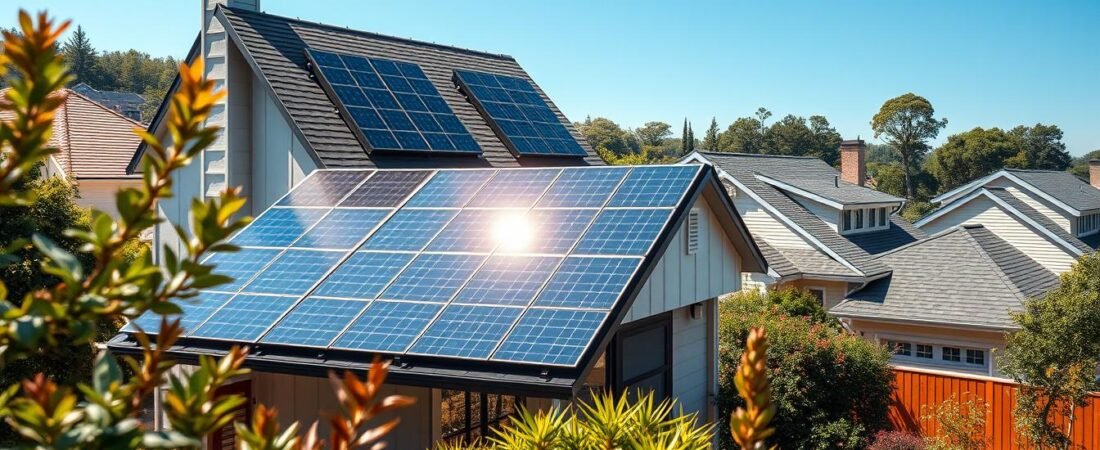
Thinking of a home energy upgrade? As of April 2026 the average solar panel system runs about $2.47/W installed. With Georgia power prices up 18% since 2020, many homeowners are reevaluating their utility spending.
Atlanta gets roughly 5.1 peak sun hours per day and more than 213 sunny days a year. That makes a rooftop system productive and a smart long‑term investment for people who want steady monthly savings.
Comparing quotes matters. EnergySage created the largest marketplace for home installs so buyers can size their system, compare companies, and lock in predictable power for 25 to 30 years. A typical home can save about $45,000 over 25 years, with monthly savings beginning near $104.
Ready to compare local installers? Visit compare local installers to start estimating your potential savings and plan a sensible installation for your home.
Understanding the Solar Landscape in Atlanta
Sunny conditions in the region mean a home energy system can generate meaningful power throughout the year. With roughly 5.1 peak sun hours daily and 213+ sunny days, panels produce steady output that homeowners can rely on.
Why that matters: Georgia’s residential rate rose from 12.5¢/kWh in 2021 to 14.1¢/kWh in 2024. Local utility factors—fuel mix, grid upgrades, and demand—push rates higher, so installing a system now acts as a long-term hedge.
Homeowners who install panels reduce how much electricity they buy from the grid. Many companies design installs to maximize production during peak hours and increase savings over time.
| Metric | Value | Impact |
|---|---|---|
| Peak sun hours | 5.1 hrs/day | Good daily generation |
| Sunny days/year | 213+ | Consistent annual output |
| Residential rate (2024) | 14.1¢/kWh | Higher grid prices increase savings |
- More sunny days mean more reliable home production.
- Rising electricity prices make systems a sensible investment over 25 years.
- Compare local companies to match system size with your usage and goals.
Current Solar Panel Cost Atlanta GA Estimates
Current market figures break down what typical installations cost by system size. Use the per‑watt metric to estimate your total price and compare local quotes quickly.
Average System Pricing
As of April 2026 the average solar panel system runs about $2.47 per watt installed. That base figure helps homeowners estimate totals for different sizes.
| System size | Average price | Range |
|---|---|---|
| 5 kW | $12,338 | $10,500 – $14,200 |
| 10 kW | $24,677 | $21,000 – $28,400 |
| 13.6 kW | $33,556 | $28,523 – $38,589 |
Cost Per Watt Breakdown
Larger systems usually lower the per‑watt ask because panels and labor scale. The average per‑watt figure covers equipment, permitting, inspection, installer profit, and installation time.
- Per‑watt metric: $2.47/W (use to size estimates).
- Larger systems often yield better value per watt and higher long‑term savings.
- Get multiple quotes from local companies to lock in the best price and incentives.
Key Factors That Influence Your Total Investment
How much power your family consumes drives system size and directly affects the final price. Start by reviewing a year of electricity bills to see typical monthly demand.
Higher usage means more panels and a bigger system, but it also raises the potential long-term savings.
Impact of Energy Usage
Usage shapes size. Homes that use more electricity need larger arrays to cover demand. That increases the upfront cost while improving lifetime savings.
- Your total investment depends on average energy use; larger systems require more equipment and labor.
- Choosing monocrystalline versus polycrystalline affects efficiency and the system price per watt.
- Permit, inspection, and specific equipment choices cause local installation prices to vary.
- Prioritize a reputable installer so homeowners get reliable workmanship and long-term support.
| Factor | Effect | What to check |
|---|---|---|
| Energy use | Determines system size | Review 12 months of bills |
| Panel type | Impacts efficiency & price | Compare warranties and output |
| Installation quality | Affects longevity | Check local reviews and certifications |
Navigating Federal and Local Solar Incentives
Incentives and rebates can cut your upfront investment by a third or more when you claim them correctly. The federal investment tax credit currently refunds 30% of the value of an installed system and is claimed on your tax return.
Local programs add more savings. GreyStone Power offers a one‑time rebate of $450 per kW AC for grid‑connected PV systems up to 10 kW. That rebate reduces out‑of‑pocket totals immediately.
Georgia Power also provides options for customers who cannot install rooftop arrays. The Community Solar program lets you subscribe to blocks of shared generation. The Simple Solar option lets you buy Renewable Energy Credits (RECs) to support new build‑out.
- Use the 30% federal tax credit to lower your system price and speed payback.
- Claim GreyStone’s rebate when eligible to reduce the installed price per kW.
- Review net billing/export rates (typically 2.9¢–5.5¢/kWh) to understand how exported energy is credited.
| Program | Benefit | Notes |
|---|---|---|
| Federal ITC | 30% tax credit | Claim on federal taxes for qualifying systems |
| GreyStone Rebate | $450 per kW AC | Available up to 10 kW for grid‑connected systems |
| Georgia Power Community Solar | Subscription to solar blocks | No rooftop install required |
| Simple Solar (RECs) | Support solar development | Buy renewable credits to offset usage |
Tip: Combine every eligible credit and rebate to maximize lifetime savings. Check program rules and timing before you sign a contract so you capture all available benefits.
Comparing Financing Options for Your Home
How you buy a system determines who owns it, who maintains it, and how fast you recoup money. Start by matching your monthly budget to ownership goals. Cash buys give direct ownership and larger long‑term savings. Loans spread the price over time while still letting you claim tax credit and incentives.
Cash Purchase vs Loans
Cash lets you avoid interest and maximize lifetime savings. A loan can make an installation affordable now, but interest affects total price and payback.
Solar Leases and Power Purchase Agreements
Leases and PPAs require little or no upfront money. Palmetto’s LightReach lease starts savings from day one. With a PPA you pay only for the power produced at a set rate, and the company owns and maintains the equipment.
- Cash vs loan: Ownership with cash; flexibility with a loan.
- Lease/PPA: No large upfront money; maintenance handled by the provider.
- Check availability: LightReach and similar options depend on your utility and may be offered to Georgia Power customers.
| Option | Who owns | Maintenance | Best for |
|---|---|---|---|
| Cash purchase | Homeowner | Owner | Max long‑term savings |
| Loan | Homeowner | Owner | Spread price, claim tax credits |
| Lease / PPA (LightReach) | Company (Palmetto) | Company maintains | No upfront money, immediate savings |
For help weighing options and projected savings, compare offerings like those in this guide to solar panels for your home.
Evaluating the Long Term Financial Benefits
Over a 25-year span, a rooftop system can turn steady sunshine into sizable household savings. A typical Atlanta home can save about $45,000 across that period, with monthly savings starting near $104.
Payback periods in Georgia are relatively short, so many homeowners see returns faster than from stocks or bonds. Rising utility rates — up roughly 18% since 2020 — make the long-term hedge effect especially valuable.
By generating your own power, you cut how much you buy from the grid. Even modest annual rate increases add up over 25 years and boost the total savings delivered by the system.
- Projected savings: ~ $45,000 over 25 years for a typical home.
- Monthly relief: Immediate reductions in bills starting near $104.
- Better ROI: Installation plus incentives often outperforms traditional investments over the same term.
Bottom line: When you combine federal and local incentives with steady production from panels, the initial cost is offset by decades of reliable savings and protection from rising utility costs.
How to Select the Right Solar Installer
Choosing a trustworthy installer is the single best step you can take to protect your investment and ensure years of trouble-free power. Start by prioritizing local, vetted teams that can show real project history and verified reviews.
Importance of Vetted Local Installers
Experience matters. IntegrateSun, LLC brings 37 years and 7,000+ projects across 12 states, while Palmetto Energy (est. 2009) and Sunlight Solar (est. 2003) offer decades of proven service for homeowners.
Solar Energy Partners in Smyrna stresses that every roof is unique. EnergySage helps by pre-screening partners so you receive quotes only from high-quality companies.
- Longevity: Select a company that will handle maintenance for 25 years.
- Sizing and design: A good installer assesses home size and energy needs to maximize power production.
- Compare quotes: Multiple bids reveal fair pricing and professional workmanship for panel installation and solar panel installation.
Always verify permits, warranties, and local code compliance before signing. For vetted local options, see trusted Atlanta installers.
Assessing the Impact on Your Property Value
A Zillow study found that homes with owned systems sell for about 4.1% more than comparable properties. That premium usually applies when the system is owned at the time of sale, not when it is leased or under a Power Purchase Agreement.
Buying the system outright means the added value stays with your property. A cash purchase makes it simple: the buyer gets the savings and the seller keeps the resale benefit.
Federal tax incentives and the investment credit reduce your upfront costs and improve payback. Still, the long-term increase in home value is a major reason many owners choose to buy rather than lease.
- Research shows ~4.1% value uplift for owned systems.
- Cash purchase preserves the resale benefit for the seller.
- Lower monthly energy bills make a property more appealing to buyers.
| Factor | Effect on resale | What to consider |
|---|---|---|
| Ownership | Higher resale value | Prefer purchase over lease |
| Tax credit | Reduces upfront outlay | Claim on federal tax return |
| Energy savings | Buyer appeal | Show estimated annual savings |
Conclusion
Smart comparisons and vetted companies turn an upfront investment into reliable household savings.
With local production on 213+ sunny days per year, a correctly sized system can deliver strong long‑term returns. Typical homeowners in the area see roughly $45,000 in savings over 25 years when they combine incentives and the federal tax credit.
Consider purchase over lease to capture an estimated 4.1% boost in home value and to claim the full tax credit. Palmetto has completed thousands of installs in Georgia and offers lease options like LightReach for those who prefer low upfront payments.
Compare multiple quotes, verify net export metering, and run a solar calculator to estimate your yearly savings before you sign an agreement.