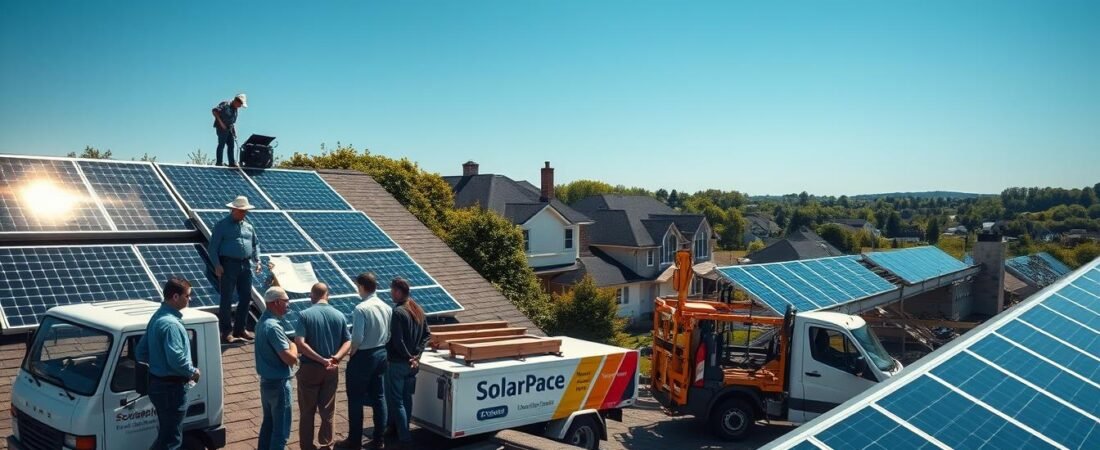
Looking for trusted local providers? This short guide connects residents with a curated list of solar panel companies hanover pa that meet high standards for service and reliability.
Our research team checked credentials, reviews, and warranty options so you can choose a professional installer with confidence. Choosing the right partner for installation helps your home run efficiently and supports nearby businesses.
Whether you are starting research or ready to sign a contract, this guide gives the essential facts every homeowner needs. Expect clear comparisons, practical tips, and contact details to move forward.
- Curated list of reliable local providers
- Focus on quality installation and warranties
- Practical steps for homeowners at each stage
Why Switch to Solar Energy in Hanover
Homeowners who adopt rooftop power systems often see meaningful reductions in yearly utility spending. In Hanover the average household saves about $1,316 per year on electricity when switching to a system that generates on-site energy.
Generating your own power reduces reliance on the grid. That shields your household from rising rates and gives you greater control over monthly bills.
Investing in a system is also a long-term value play. It can raise property worth and deliver steady savings over decades.
- Lower annual electricity costs and predictable savings.
- Greater household resilience during outages and price spikes.
- Reduced carbon footprint while enjoying financial benefits in Pennsylvania.
| Benefit | Typical Impact | Why It Matters |
|---|---|---|
| Annual Savings | $1,316 average | Cuts monthly bills and improves cash flow |
| Energy Independence | Lower grid use | Protects against rate increases |
| Property Value | Higher resale appeal | Long-term financial gain for homeowners |
| Environmental Impact | Lower emissions | Helps meet community sustainability goals |
Methodology for Selecting Top Solar Panel Companies Hanover PA
We screened thousands of installers nationwide to find firms that meet strict quality and trust standards for local homeowners.
Industry Reputation
We checked objective credentials such as Better Business Bureau ratings, licensing, and years in business. Companies with at least 5 years of operation were prioritized to ensure experience with state rules and permitting.
Customer Satisfaction Standards
Customer experience was measured by scanning Google and Trustpilot reviews for consistent feedback on installation quality and post-sale service.
- Scope: Over 1,500 firms analyzed nationwide.
- Transparency: Clear pricing and financing options.
- Support: Warranty terms and follow-up service checks.
| Criteria | What We Checked | Why It Matters |
|---|---|---|
| Reputation | BBB score, years in business | Shows trust and longevity |
| Customer Reviews | Google & Trustpilot ratings | Real-world service insight |
| Pricing & Services | Estimate clarity, financing | Helps compare value and cost |
Top Rated Solar Installers Serving Your Area
Glim Solar leads the list with a perfect 5.00-star rating from our research team. That score reflects strong workmanship, fast response times, and clear pricing.
When comparing local providers, look at specific panel installation services offered by firms like The Solar Brokers USA and Ethical Energy Solar. These names show the range of offerings from basic installs to full system design.
“Choose installers that provide free quotes and a customized system layout — it makes budgeting and performance expectations much clearer.”
We help homeowners compare the best solar companies by checking customer support, warranty terms, and available panels. Reliable providers often include free site visits and end-to-end services so every customer gets a tailored solution.
For a broader comparison of top-rated options, see our curated list of trusted providers in the area at best solar companies.
Understanding the Solar Installation Process
Knowing each step makes the project easier to follow. The typical timeline runs from a site assessment to final interconnection. Most residential installations take one to three days, depending on roof layout and system size.
Site Assessment and Permitting
Your chosen installer will inspect roof condition, shade, and wiring. They prepare permit documents and submit them to local officials. This keeps the project compliant and on schedule.
Installation Day Expectations
The crew mounts racking, runs wiring, and secures panels and inverters. Work is organized to limit disruptions. Professional teams keep the customer updated on timing and any changes.
Final Inspection and Interconnection
After installation, a town representative inspects the system and signs the approval needed for grid hookup. Once approved, the utility completes interconnection and your system can start producing energy.
| Stage | Typical Time | Who Handles It |
|---|---|---|
| Site assessment & permits | 1–7 days | Installer |
| Physical installation | 1–3 days | Installation crew |
| Inspection & interconnection | 1–14 days | Local government & utility |
| Customer updates | Ongoing | Project manager / installer |
Financial Benefits and Tax Incentives
Tax breaks and local rebates can turn a large upfront cost into a manageable investment for most homeowners.
On average, homeowners capture about $16,000 in savings over 20 years when they use available federal and local incentives. That figure factors lower monthly electricity bills and reduced long‑term pricing exposure.
The federal investment tax credit allows you to claim a portion of the project cost on your return. This reduces your tax liability and shortens payback time for the system.
- Lower monthly bills help the system pay for itself over time.
- Incentives plus sensible financing improve overall savings.
- Working with an experienced installer helps you claim every available credit.
| Item | Typical Impact | Why it Matters |
|---|---|---|
| Average savings | $16,000 / 20 years | Long-term financial benefit for homeowners |
| Tax credit | Percentage of project cost | Reduces upfront net expense |
| Monthly bills | Lowered immediately | Improves household cash flow |
Tip: Ask your installer to run incentive estimates and compare pricing and reviews so you know the net cost and expected savings before you sign.
Evaluating Your Home for Solar Potential
A professional visit helps reveal whether your roof angle and shade patterns will support strong year‑round production.
Assessing roof condition and sunlight exposure starts with a visual inspection. The installer checks shingles, flashing, and rafters to confirm structural soundness.
They also map shade from trees, chimneys, and nearby buildings. This step predicts how much usable energy your home can generate.
Many companies offer free consultations so a customer can learn if their property qualifies for incentives or the federal tax credit before committing.
Key items covered in a site assessment
- Roof age and structural integrity.
- Orientation and slope for best output.
- Shade analysis and expected annual yield.
- Eligibility for local incentives and the tax credit.
| Assessment Item | Why It Matters | Typical Outcome |
|---|---|---|
| Roof condition | Ensures safe installation | Pass, repair, or replace recommendation |
| Sunlight & shade | Directly affects energy output | Estimated annual production (kWh) |
| Incentives check | Reduces net cost | List of eligible rebates and tax credit info |
| Cost estimate | Sets expectations for installation | Detailed quote with system size and savings |
Environmental Impact of Renewable Energy
Switching to renewable systems at home shrinks your household’s carbon footprint in measurable ways.
In the Hanover area, a typical rooftop setup can cut about 50 pounds of carbon each year. That is a tangible reduction that adds up across neighborhoods.
Manufacturing these panels uses energy up front. Still, most systems repay that energy in roughly 1 to 4 years of operation. After that point, the system delivers primarily clean power.
Many trusted solar companies hanover residents choose also follow ESG practices. They plan for responsible recycling and safe end-of-life handling to limit waste.
“Choosing renewable energy is a practical step that benefits both the planet and your long-term household costs.”
- Offset local CO2 by installing panels on your home.
- Short energy payback means lasting environmental gains over the system’s life.
- Responsible firms offer recycling plans and transparency about materials.
| Metric | Typical Value | Why it Matters |
|---|---|---|
| Carbon reduction | ~50 lbs/year | Lowers neighborhood emissions |
| Energy payback | 1–4 years | Quick environmental return on manufacturing cost |
| End-of-life handling | Recycling & ESG plans | Reduces waste and pollution |
Choosing the Right Equipment for Your Needs
Your choice of modules and storage greatly affects system output, cost, and long‑term reliability.
Start by matching efficiency to available roof space. High-efficiency monocrystalline modules deliver more watts per square foot. They work well when space is limited and you want maximum yearly energy.
Monocrystalline vs Polycrystalline
Monocrystalline tends to cost more but produces higher output and performs better in low light. Polycrystalline is more affordable and still reliable when you have ample roof area.
Discuss lifetime warranties, degradation rates, and real-world testing with your installer so you pick the best balance of cost and performance.
Battery Storage Solutions
Adding battery storage keeps your home powered during outages and shifts more consumption to self-generated energy. Popular options include modular lithium systems such as Tesla Powerwall and other branded batteries.
Ask about round-trip efficiency, usable capacity, and warranty terms. These specs determine how much usable backup you actually get and how long the system will last.
- Compare pricing and services from your installer for bundled systems.
- Request production and storage modeling for realistic lifetime yields.
- Prioritize quality components to reduce maintenance over time.
“Talk through pros and cons with your installer to align equipment choice with your budget and energy goals.”
Tips for Comparing Solar Quotes
Ask each installer for an itemized proposal that shows equipment, labor, permits, and expected production. A clear breakdown prevents surprises.
Get at least three quotes from different providers so you can compare pricing and services. Look for differences in warranties and maintenance plans.
- Check online reviews to learn how past customers rated service and support.
- Verify the estimated energy output and how it will cut your electricity bills.
- Confirm which incentives are included and how they affect final pricing.
“Choose the bid that balances cost, warranty, and realistic savings—not just the lowest price.”
| Quote Item | What to Look For | Why It Matters |
|---|---|---|
| Equipment specs | Model, efficiency, and quantity of panels | Determines long-term output and value |
| Installation costs | Labor, racking, permits | Shows true project cost beyond parts |
| Warranties | Product & workmanship terms | Protects your investment over time |
| Projected savings | Annual kWh and bill reduction | Helps compare ROI and payback |
Conclusion
Choosing a trusted local installer closes the gap between interest and real savings for your home. With a strong, clear plan, you can turn a simple idea into reliable, long-term energy benefits.
Use our list of the best solar companies and the short checklist in this guide to compare quotes, equipment, and warranty terms. Don’t forget to claim available solar incentives and the federal tax credit to lower upfront costs for your panel installation.
Compare at least two reputable firms, review projected savings, and pick the option that fits your budget and goals. We hope this guide helps you move forward with confidence and enjoy many years of lower bills and cleaner power.