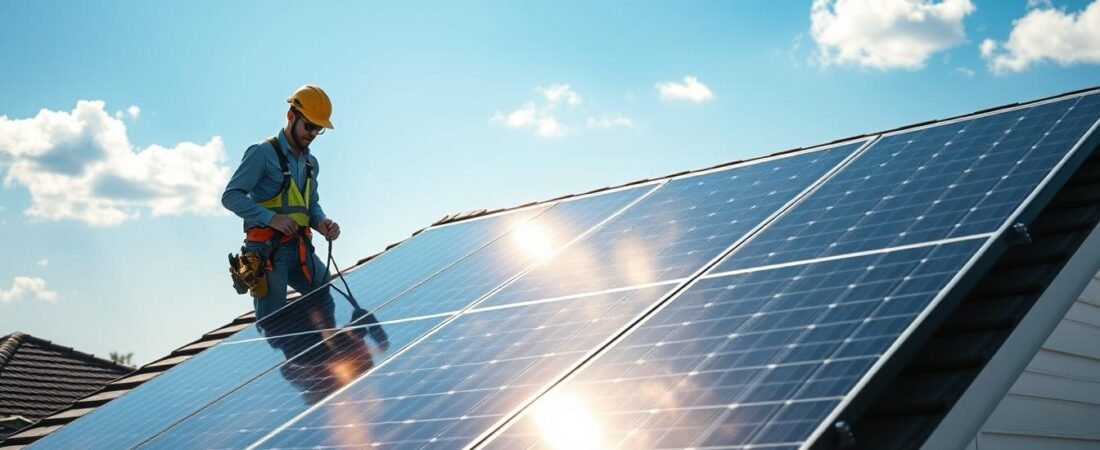
Welcome to a clear, friendly introduction to setting up reliable off-grid gear. This guide, published on December 4, 2025, walks you through key mechanical and electrical needs so your energy system works safely and efficiently.
Whether you run a small business, outfit a road cabin motorhome, or manage a farm workshop marine site, our product line supports many uses. You will find tips for kits charge controllers, battery chargers solar, and panels battery chargers to match common setups.
If a page blocked extension appears, try disabling extensions or contact support for the latest information. We also invite you to join renogy and share experiences with our community for practical advice on controllers lithium batteries and lithium batteries inverters.
Understanding Your Solar Power Needs
Begin with a quick audit of every device you plan to run off-grid. List each item, note its wattage, and estimate hours of daily use so you can calculate true consumption.
Calculating Daily Consumption
Multiply device wattage by hours used. For example, a 10W LED light run for 4 hours equals 40Wh. Do this for every appliance to get total daily energy use.
Pro tip: add a 20% buffer to cover inefficiencies and surprises. This buffer keeps your system reliable when conditions change.
Selecting Battery Capacity
Choose battery capacity based on how many days you want to go without charging. Multiply daily Wh by the number of days of autonomy, then allow for depth-of-discharge limits to protect battery life.
- List all devices (a 60W fridge for 24 hours = 1440Wh) to find true daily demand.
- Always include a 20% safety margin when sizing batteries and capacity.
- Plan panel wattage in the range of 1.3 to 1.5 times your daily needs to handle cloudy days.
- If a page blocked extension appears while using our calculator, refresh the browser to continue.
Essential Tools and Materials for Your Project
A smooth setup begins with a clear checklist of parts and hand tools. Gather 10 or 8 AWG cable, quality MC4 connectors, a reliable charge controller, and at least one pure sine wave inverter to protect sensitive gear.
Have wire strippers, crimpers, a multimeter, and proper fasteners on hand. These tools make wiring and testing faster and safer.
Choose batteries wisely. We recommend lithium batteries for longer life and deeper usable discharge. Also include deep-cycle battery options if budget or compatibility requires it.
- Double-check total battery capacity to match daily consumption and avoid undersizing.
- Pick inverters that meet peak and continuous loads; pure sine wave models are best.
- Confirm connectors and cable lengths before you start so runs are neat and secure.
If a page blocked extension appears while checking materials, try disabling extensions to access our full tool list.
Planning the Ideal Solar Panel Layout
Good layout starts with simple observation. Walk the full perimeter of your vehicle and note large, unobstructed roof space that gets direct sun most of the day. This helps maximize power without extra hardware.
Optimizing for Sunlight Exposure
Avoid spots near vents, air conditioners, or satellite dishes that cast shade. Even short shading can cut output dramatically.
- RVs: pick wide, open roof areas to fit multiple modules and reduce wiring runs.
- Place panels away from rooftop equipment to keep output steady through the day.
- Our kits charge controllers and battery chargers solar fit varying layouts for workshop marine road or marine road cabin setups.
- Explore farm workshop marine and chargers solar kits for flexible placements and easy upgrades.
- Stay updated on product launches jul, solar kits charge, and panels battery chargers to keep your system current.
- If a page blocked extension appears, check browser settings so you can view layout diagrams and blocked extension blocked resources.
Preparing Your Roof for Installation
Inspect the entire roof for soft spots and rust so you can address them before mounting.
Thoroughly clean the roof area with a mild detergent and water. Remove dirt, grime, and oxidation so adhesives and fasteners bond well.
For metal roofs, sand any rust spots and apply a rust inhibitor. Let the treated areas dry fully before you proceed.
Always allow the roof to dry completely before mounting. Moisture can weaken seals and shorten the life of your work.
- Proper preparation of your roof space is crucial for successful work on rvs or your road cabin motorhome.
- If a page blocked extension appears, try disabling extensions to view our full guide on cleaning and prep.
- Inspect existing openings for cable routing to save time and avoid extra drilling.
| Prep Step | Tool / Product | Notes |
|---|---|---|
| Surface wash | Mild detergent, water | Removes oils and grit for better adhesion |
| Rust treatment | Sandpaper + rust inhibitor | Required for metal roofs; let cure fully |
| Drying | Air dry or clean cloth | Ensure surface is bone dry before mounting panels |
| Routing check | Flashings, grommets | Reuse openings when possible to protect seals |
Renogy Solar Panel Installation Process
Start the process by lining up each module with the marks you made during layout so mounts sit squarely and wires run clean.
Secure the array using stainless steel bolts and lock washers. These prevent loosening from road vibration and keep connections tight.
Seal every penetration. Apply a UV-resistant, weatherproof sealant around roof openings and fasteners to keep the system watertight. Proper sealing protects your roof and electronics from water damage.
- Align modules with mounting points marked during planning.
- Use stainless hardware so mounts stay stable while driving.
- Double-check seals to prevent water ingress for long-term durability.
- We offer reliable off-grid energy solutions to help power your adventures and daily needs.
- If a page blocked extension appears, refresh your browser to continue with step-by-step guidance.
Final check: tighten bolts to spec, confirm wire routing, and inspect seals once dry. A quick test run ensures the system delivers steady power and peace of mind.
Mounting Techniques for Different Surfaces
Choose the mounting style that matches your roof material and how much modification you’re willing to do.
Drill-Free Adhesive Methods
Drill-free mounts use heavy-duty adhesive to secure modules without penetrating the roof. Clean both the roof and the mount with alcohol first.
Follow the adhesive maker’s cure time and temperature guidelines. This method keeps seals intact and lowers leak risk.
Using Z-Brackets for Rigid Panels
Z-brackets give rock-solid hold for rigid units but require drilling into the surface. Use stainless fasteners and a good sealant around each hole.
Tip: pre-fit everything before final drilling to avoid mistakes.
- Choose between drill-free adhesive methods or Z-brackets by roof type and comfort with modifications.
- Our kits charge controllers and battery chargers solar gear pair well with different mounts.
- We support workshop marine road and marine road cabin projects with compatible chargers solar kits and mounting hardware.
- If you see a page blocked extension, try disabling extensions to access detailed guides and product launches jul.
| Mount Type | Best For | Pros | Cons |
|---|---|---|---|
| Adhesive (drill-free) | Rubber, fiberglass roofs | No roof penetrations; quick install | Depends on surface prep; limited for very heavy modules |
| Z-brackets | Metal, reinforced roofs | Very secure; handles vibration well | Requires drilling and proper sealing |
| Hybrid (adhesive + fastener) | Mixed materials, high-wind sites | Extra security; balanced approach | More labor and parts |
Wiring Your Solar System Components
Start by deciding whether higher voltage or higher current best fits your inverter and charge controller.
Series wiring raises the array voltage by linking the positive terminal of one module to the negative of the next. This helps systems that need higher volts to charge or to reduce current loss over long runs.
Series Versus Parallel Configurations
Parallel wiring increases amperage by joining all positives together and all negatives together. Use this when you need more current for battery charging or for lower-voltage controllers.
- Proper wiring of your solar panels is essential for maximizing power and keeping the system safe.
- Use MC4 connectors to link the positive of one module to the negative of the next when wiring in series.
- Always double-check polarity and tighten connections before finalizing the wiring to ensure peak efficiency.
- Use high-quality cables and secure them with ties or conduit to protect runs from wear and vibration.
- If you see a page blocked extension, check your internet connection to view detailed wiring diagrams.
Tip: match array voltage to controller input limits and confirm fuse or breaker sizing on the DC run. Small checks now prevent big problems later.
Connecting Charge Controllers and Batteries
Start by wiring the battery to the controller so the controller has a stable reference before you add array input.
Connect battery terminal wires to the charge controllers first. This order prevents potential damage from voltage spikes when you later hook up the solar panel.
Match the + and – marks on the leads and controller to avoid reverse polarity. If you use series or series parallel wiring, be sure the combined voltage and current meet your controller’s limits.
- Always connect batteries to the controller before adding panels to protect components.
- When using series parallel setups, confirm wiring matches your controllers lithium batteries input specs.
- If a page blocked extension appears, try disabling extensions to view our full connection guide.
- Tighten all terminal screws to prevent loose contacts and heat buildup.
- Verify battery voltage matches controller settings for correct charging behavior.
| Step | Check | Why it matters |
|---|---|---|
| Battery first | Polarity, voltage | Prevents controller damage from backfeed |
| Polarity match | + and – alignment | Avoids reverse polarity faults and blown fuses |
| Series/Series parallel | Voltage/current totals | Meets controller input specs for safe operation |
| Terminal torque | Secure connections | Reduces resistance, prevents heat and power loss |
Integrating Inverters for AC Power
Place the inverter as close to the battery bank as practical to cut voltage drop and losses. Short, direct cable runs save energy and reduce heat.
Use properly sized cables and a fuse between battery and inverter. This protects equipment and keeps the connection safe under load.
Choose a pure sine wave inverter when you power sensitive electronics. These inverters deliver clean AC and prevent flicker, noise, or damage to delicate devices.
“Mount close, fuse correctly, and use pure sine wave units for reliable AC power.”
- Integrating your inverter converts DC from lithium batteries into usable AC for household gear.
- Our kits charge controllers and battery chargers solar help you manage storage and battery health.
- We support workshop marine road, farm workshop marine, and marine road cabin setups with compatible chargers solar kits.
- Stay aware of product launches jul, solar kits charge, and panels battery chargers for optimized lithium batteries inverters.
- If a page blocked extension appears, refresh your browser to view model-specific wiring instructions.
Monitoring System Performance
Keep an eye on system output each day to spot drops in generation before they become problems.
Many modern charge controllers include built-in monitoring. You can also add a separate display unit for more detail when you need long-term data or remote access.
Use a multimeter to verify voltage at the battery, at controller terminals, and at the input to the inverter. Small voltage differences can point to loose connections or bad fuses.
Quick checks to run weekly:
- Confirm charge controllers and inverter show normal readings and no error codes.
- Inspect cabling and connectors for heat, corrosion, or looseness.
- Ensure panels get full sun and that shade or debris isn’t reducing power.
“Consistent, simple checks prevent small faults from becoming system failures.”
| Item | What to Measure | Acceptable Range |
|---|---|---|
| Controller | Input/output voltage, error codes | Matches system specs; no faults |
| Battery | Voltage and resting voltage | Within manufacturer limits; no deep discharge |
| Inverter | AC output, fault indicators | Stable sine output; no trips |
Regular monitoring keeps your setup reliable and lets you troubleshoot quickly while on the road.
Routine Maintenance and Safety Inspections
A quick monthly check keeps your system running safely and at peak output.
Cleaning Panels for Efficiency
Keep panels clean. Wash surfaces every few months with water and a soft brush to remove dust, pollen, and bird droppings.
Dry, abrasive cleaners can scratch surfaces. Use gentle tools and plain water when possible.
Tip: clean early in the morning or late evening to avoid rapid evaporation and streaks.
Inspecting Cables and Connectors
Perform visual checks of cables, connectors, and battery terminals on a regular schedule.
Look for corrosion, frayed insulation, or loose fittings. Replace damaged parts right away to protect power delivery and safety.
- Routine maintenance helps your system deliver reliable energy for many years.
- Keep roof space clear of obstructions so panels get full sun across a wide range of days.
- Check battery connections and product wiring to prevent heat and faults.
For a detailed guide on cleaning and inspection best practices, see our maintenance best practices.
“Small, consistent checks prevent small issues from turning into costly repairs.”
Conclusion
Follow these final tips to protect your investment and enjoy steady, reliable power.
By following this simple process you now know how to size, mount, and maintain your solar panels and batteries for years of dependable power.
Keep key items like charge controllers and inverter settings in hand, and store this information where your crew or business can access it.
Want more support? Join renogy to connect with our community and share road cabin motorhome or business experiences.
Our off-grid energy solutions, including controllers lithium batteries and lithium batteries inverters, are built to help you travel farther and live more independently.