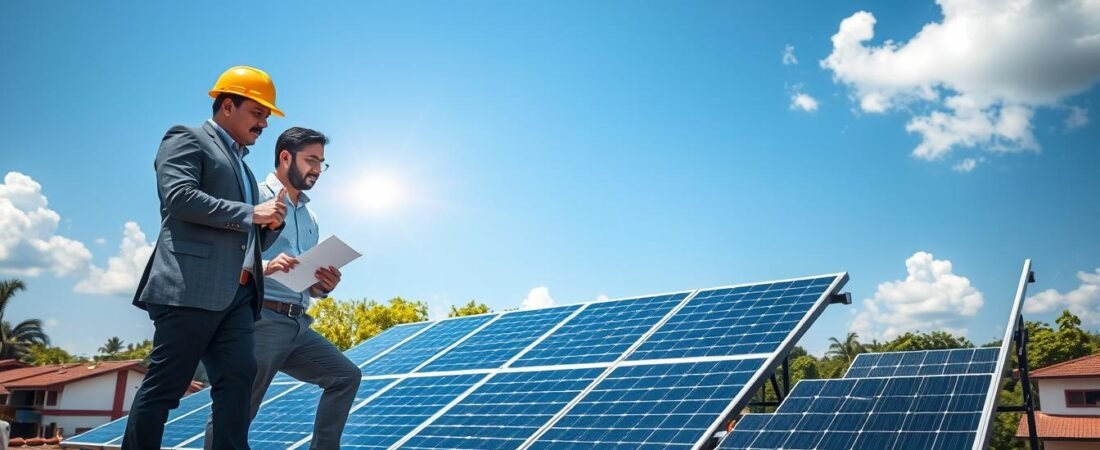
As we head into 2026, understanding the solar panel installation cost in india is essential for any homeowner eyeing energy independence.
Many homeowners choose to install solar panels to cut rising electricity bills and support a greener future. The market is changing fast, and government subsidies now make rooftop systems more accessible.
This short guide explains the key factors that shape the total cost of a residential system. We cover equipment, labor, permits, and how subsidies affect your final price.
Proper planning helps you meet power needs and improve long-term returns. By analyzing panel system requirements and available government support, you can decide whether to install solar now or wait for better incentives.
Key takeaways: Understand total costs, check subsidies, and compare system options to make a smart home investment.
Why Investing in Solar Energy is a Smart Move
Choosing a solar system for your home blends practical savings with clear environmental benefits. It cuts dependence on fossil fuels and lowers your household carbon footprint.
Over time, a quality solar panel setup can pay back the initial investment through reduced monthly electricity bills. Many homeowners find that a well-sized system brings steady savings and a buffer against rising rates.
Beyond bills, properties with reliable panels often sell faster and at higher prices. A rooftop array adds appeal for buyers who value energy efficiency.
- Energy independence: a panel system helps reduce exposure to grid outages and price swings.
- Low maintenance: modern systems require minimal upkeep, letting you enjoy benefits without ongoing hassle.
- Long-term value: the upfront cost is offset by years of lower utility expenses and increased resale value.
Ready to weigh whether a system fits your goals? Learn more about whether a purchase is right for you at is it worth it.
Understanding the Components of Your Solar System
A reliable home energy setup depends on the right mix of modules, converters, mounts, and storage.
Panels and Inverters
The core of any solar system is the panels that convert sunlight into electricity for your home.
Inverters turn that DC output into usable AC power. String inverters remain cost-effective but carry a single point of failure. Microinverters improve yield in shaded spots and simplify monitoring.
Mounting Structures and Battery Backup
Mounts secure the array and set the optimal tilt and orientation for peak capacity. Good framing reduces wear and eases maintenance.
Batteries add resilience by storing excess energy. They offer backup during outages and raise overall energy independence.
| Component | Primary Role | Key Advantage | Consideration |
|---|---|---|---|
| Panels | Convert sunlight to electricity | Direct energy production | Quality affects lifespan |
| Inverters | DC to AC conversion | Efficiency and monitoring | Type affects performance |
| Batteries | Store excess energy | Backup power | Adds to upfront cost |
| Mounts | Secure and angle array | Protects components | Roof type matters |
Factors Influencing Solar Panel Installation Cost in India
Several key variables determine how much your home energy upgrade will ultimately cost.
Type and quality of modules matter most. Monocrystalline units deliver higher efficiency but come with a higher price. Polycrystalline options lower the initial price but reduce peak output.
System size is another big driver. A larger system needs more panels and higher-rated inverters to meet household electricity needs. A professional energy audit sets the correct capacity for your home.
- Component quality: Better inverters and mounts raise longevity and cut maintenance spending.
- Layout and complexity: Ground-mounted setups demand more labor and materials than rooftop systems.
- Incentives: Government subsidies and local incentives can lower the cost installing panels and speed payback.
Choosing the right size and hiring experienced installers ensures reliable power and long-term savings. Evaluate these factors carefully to match performance with budget.
Breaking Down the Financial Investment
Breaking down the numbers helps you see where your money goes and how fast savings begin.
Average System Costs
A typical home upgrade ranges from INR 1.5 lakh to INR 5 lakh depending on size and features.
A 1 kW setup generally falls between INR 65,000 and INR 85,000.
Cost Per Watt Analysis
Larger systems usually lower the per-watt price and improve return on investment.
Compare quotes on a per-watt basis to spot real value.
Quality and Maintenance Considerations
High-quality components can raise upfront expense by 10%–30%, but they cut repair needs and extend life.
Include labor, mounts, inverters, and optional batteries when planning your budget.
- Account for equipment, labor, and potential future savings on electricity bills.
- Choose reputable brands to reduce long-term maintenance and downtime.
- Check available subsidies to lower the overall outlay.
Navigating Government Subsidies and Incentives
Government programs now make rooftop clean-energy systems far more affordable for many homeowners. Subsidies under schemes such as the PM Surya Ghar Muft Bijli Yojana can cover roughly 20%–70% of the total project, depending on location and scheme specifics.
India set a national target to add over 10 GW of rooftop capacity by 2023, showing strong public commitment to expand home renewables. For U.S. readers comparing programs, the lesson is the same: incentives cut upfront barriers and speed payback.
How to Apply for Rooftop Solar Schemes
Follow ministry or local authority guidelines to qualify. Typical steps include system verification, paperwork for subsidy approval, and compliance checks for equipment and mounts.
- Gather documents: identity, property proof, and system specs.
- Ensure quality: approved inverters, batteries, and modules usually meet subsidy rules.
- Submit via official channels: use the portal or approved vendor process to secure funds.
Proper documentation and adherence to standards make approval smoother. Learn more about government support and steps to apply at government subsidy guide.
Conclusion
Choosing a durable home energy system today locks in steady savings and reliability.
Investing now offers long-term financial benefits and lower electricity bills for many homeowners. A certified company with a 25-year warranty can keep your panel system reliable for decades.
Careful evaluation of quality, inverters, and maintenance needs helps you maximize output and reduce unexpected repairs. Government subsidies and local incentives also lower upfront cost and speed payback.
Ready to take the next step? Learn how a proper online presence supports reputable vendors with a professional website and make a smart choice for your home and the planet.