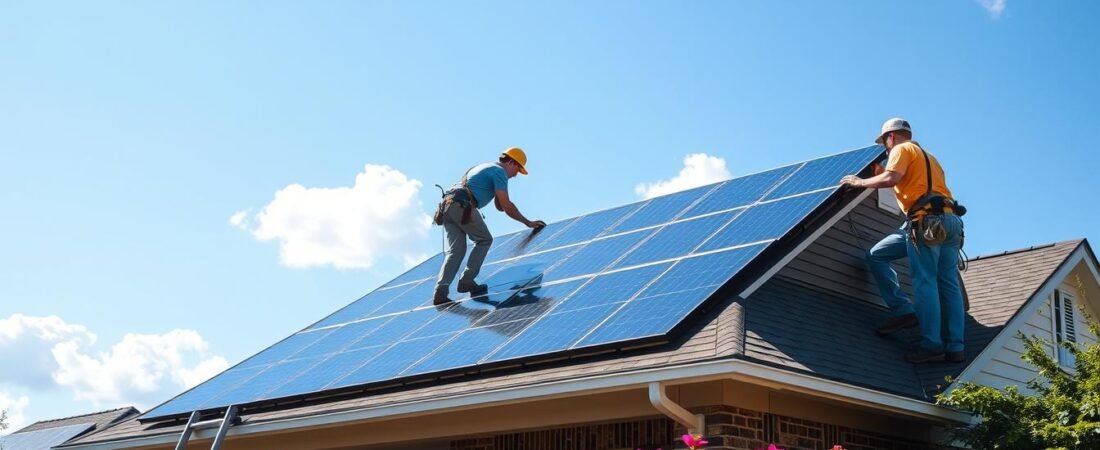
Finding the right solar panel installation pineville la service is a key step for homeowners who want clean, reliable power. Choose a company with years of experience so your system lasts and performs.
Our directory helps you compare top-rated installers, read reviews, and check cost estimates. This saves time and gives a clearer picture of price, service, and long-term energy savings.
A professional installation job requires a reliable company that understands local rules and your home’s needs. We list companies pineville that can handle the whole project—design, permits, and the final job—so you can feel confident about your investment.
Start smart: use reviews and years of work to pick an installer who delivers quality, good value, and lasting power for your home.
Why Choose Solar Energy for Your Pineville Home
Moving to on-site renewable energy brings long-term savings and more control over household electricity. Many homeowners choose clean options to cut monthly bills and reduce reliance on the grid.
High-quality solar panels make it possible to generate reliable power for years. A well-sized system can boost property value and deliver steady savings for the whole family.
“Our home saw lower electricity costs the first summer after a trusted installer finished the work.”
Find reputable companies pineville residents trust to ensure warranties and performance. Use a local directory like companies pineville to compare providers and pick the right experts for your goals.
- Lower monthly bills
- Durable panels with long lifespans
- Greater independence from utility rate hikes
| Benefit | Impact | Expected Years |
|---|---|---|
| Lower Bills | Reduced electricity costs | 20+ |
| Home Value | Higher resale appeal | 20+ |
| Reliability | Consistent power generation | 25 |
Finding Reliable Solar Panel Installation Pineville LA Experts
Finding trusted local experts makes a big difference when planning a home energy project. A clear, step-by-step check will help homeowners choose a qualified company with proven work.
Evaluating Company Reviews
Read local reviews and ask specific questions about years in business and past jobs. Make sure to confirm warranty terms and the quality of the solar panel work.
- Look for feedback from homeowners about service and final system performance.
- Ask an installer for references and recent project data.
- Today’s Homeowner lists three top companies pineville to start your shortlist.
Comparing Local Quotes
Get at least three quotes to compare costs, pricing structure, and included services. Reliable companies provide transparent pricing and clear steps for the panel installation job.
| Company | Estimated Cost | Included Service |
|---|---|---|
| Company A | $12,000 | Design, permits, install |
| Company B | $11,200 | Install, warranty |
| Company C | $13,000 | Full service, monitoring |
Tip: When you compare prices, keep mind the total lifetime costs and ask questions about hidden fees.
Understanding the Solar Installation Timeline
A realistic timeline removes surprises and keeps the project on track from the initial site visit to the final day. A trusted installer will assess your roof at your house or via a virtual walk-through to plan panel placement and wiring.
Most installation jobs take one to three days, depending on roof complexity and system size. On the first day crews set racking and secure mounting points.
On the following day the team routes wiring, mounts inverters, and places the panels. The final day focuses on testing, grounding, and clean-up so your home is safe and ready.
- Site visit: assessment and layout planning at your house or online.
- Installation days: racking, wiring, and panel placement.
- Final checks: testing and handover so the system produces electricity.
Quality companies often have busy schedules, so allow extra time for permits and booking an installer. With clear communication, the whole process is efficient and your home starts producing clean power within days.
Factors Influencing Your Total Project Cost
Understanding what drives total project cost helps you plan your budget and avoid surprises. A clear view of pricing gives you leverage when you request quotes from companies. Keep questions ready so an installer can explain line-item charges.
Calculating Price Per Watt
Start with the price per watt to compare offers. Multiply that figure by the system size to get core equipment costs. Then add labor and other service fees for the full project price.
- System size and the number of watts determine most of the equipment cost.
- Higher-quality panels raise upfront costs but can improve long-term savings.
- Labor rates vary by installer and affect total labor costs significantly.
- Ask each company for a breakdown that lists equipment, labor, permits, and warranties.
| Factor | Typical Impact | Notes |
|---|---|---|
| Price per watt | High | Use to compare prices across quotes |
| Labor | Medium | Depends on roof complexity and local rates |
| Equipment quality | Medium | Higher quality = higher upfront cost, better savings |
Tip: Review data and recent reviews before you sign. A transparent company will explain how much cost comes from parts versus labor and help you model expected energy savings.
Preparing Your Property for Solar Equipment
Preparing your roof and grounds ahead of time reduces delays on the day the team arrives. A brief site check lets the installer confirm your house can support the system and note any repairs.
Make sure the roof is clear of debris, loose shingles, and overhanging branches. Remove rooftop obstructions so crews can work safely.
A trusted company will schedule a site visit to inspect structure and roof load capacity. The installer will verify mounting points and electrical access before the job starts.
- Clear gutters and trim trees near the roof.
- Move vehicles and outdoor items away from the work area.
- Provide easy access to the attic or breaker box if asked.
| Check | Why it matters | Result |
|---|---|---|
| Roof condition | Ensures long-term support | Fewer surprises during install |
| Site access | Speeds crew setup | Less disruption and less time |
| Obstruction removal | Safer work area | Cleaner, faster job |
Take these steps early and your property will be ready for a smooth solar panel installation that lasts.
Navigating Permits and System Inspections
Getting municipal sign-off is a key step that turns finished equipment into a working energy source. This phase confirms safety and code compliance before your system goes live.
Submitting Required Documentation
Your company will submit all permit forms and technical data once the panel installation is complete. A professional installer handles wiring diagrams, equipment specs, and permit fees so you don’t have to.
- What they file: permit applications, electrical schematics, and inspection requests.
- Who manages it: your installer or company will track paperwork and scheduling.
Final Interconnection Approval
A local government representative inspects the finished system on site. They check grounding, wiring, and safety devices to confirm the work meets standards.
Final interconnection approval is the last step. Once granted, your panels can begin producing power for your home.
Conclusion
strong, Taking informed steps now saves time and helps your system deliver reliable power for years to come.
Investing in a solar panel system is a smart way for homeowners to cut electricity costs and boost long-term savings. Compare price and service, check reviews, and verify warranty terms before you sign.
Choose one of the top companies pineville to ensure your project is handled with care. Good planning answers key questions and keeps costs clear.
With the right panels and a trusted company, your home can enjoy cleaner power, steady savings, and peace of mind.